What are you actually buying?
A floor proposal should describe what goes against the concrete, what creates the decorative finish, and what becomes the exposed wear surface. “Epoxy floor” is often used as a general description, but it does not identify all those layers. Two similar-looking flake floors can have different specifications.
Start by asking the contractor to name each product and explain its job. You do not need to become a coatings chemist. You do need enough detail to compare estimates and understand the care instructions you will receive.
How do epoxy and polyaspartic fit into a system?
Sika describes Sikafloor-217 as an epoxy for high-build and decorative applications, while Sikafloor-515 is a polyaspartic resin with garage-finish applications. These are examples of product roles, not a statement that either product will be installed on your project. See the manufacturer’s epoxy information and polyaspartic information.
| Part of the proposal | Question to ask |
|---|---|
| Concrete preparation | How will the existing surface be evaluated and prepared? |
| Primer or basecoat | Why is this product appropriate for this slab? |
| Flake or other finish | What coverage and appearance are included? |
| Topcoat | What product will face tires, cleaning, and sunlight? |
Does faster curing automatically make a better floor?
No. A fast return to use can be valuable, especially when the garage is your everyday entrance. But speed is only one requirement. A useful comparison also accounts for surface condition, appearance, intended traffic, and the manufacturer’s installation limitations.
| Product | Foot traffic | Light traffic* | Full cure |
|---|---|---|---|
| Sikafloor-217 epoxy | About 8 hours | About 2 days | About 7 days |
| Sikafloor-515 polyaspartic | About 4 hours | About 8 hours | About 5 days |
The useful comparison: the 515 example reaches foot traffic in about half the time, but it still lists five days to full cure. A same-day installation claim should specify what you may do that day.
Ask for separate milestones for installation completion, walking, parking, and normal cleaning. “Done in a day” does not tell you when to put a vehicle on the floor. If a proposed date matters because of travel or an upcoming move, raise that before choosing the system.
What about sunlight and wet winter conditions?
Tell the estimator how the space is used: whether the door stays open, where direct sun reaches the floor, and where wet vehicles or boots enter. Those details are more helpful than choosing a finish from an indoor sample alone.
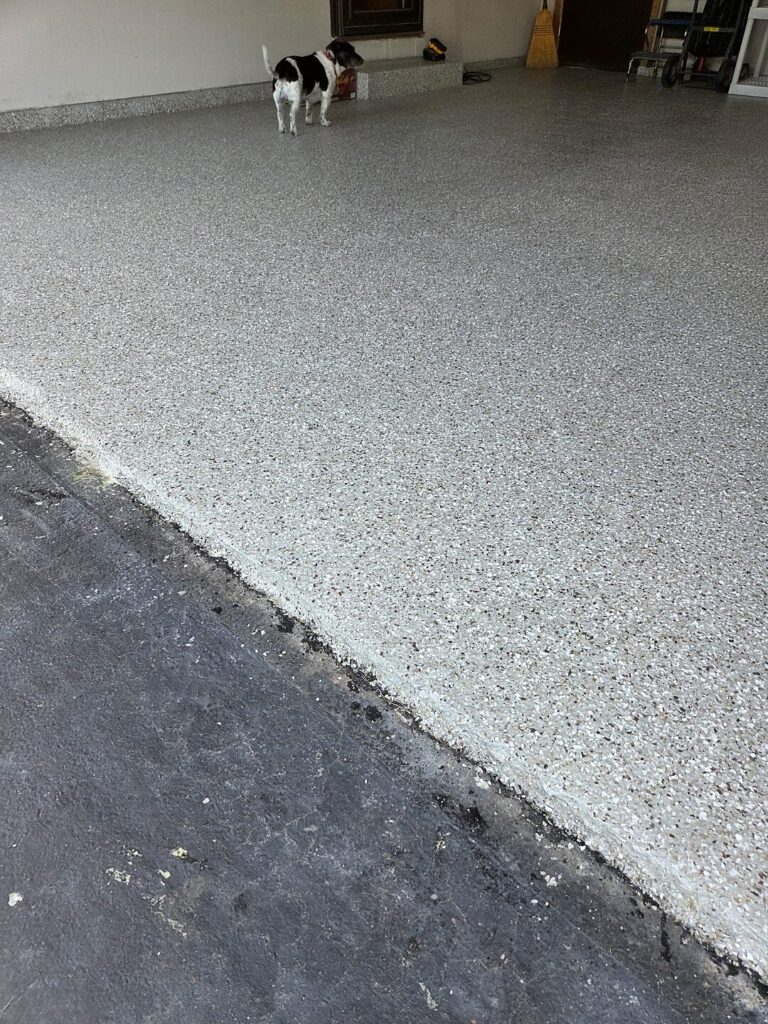
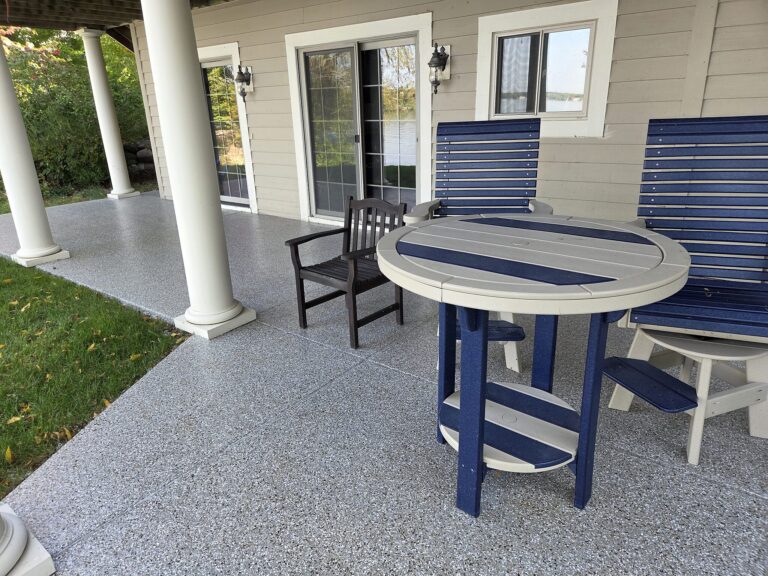
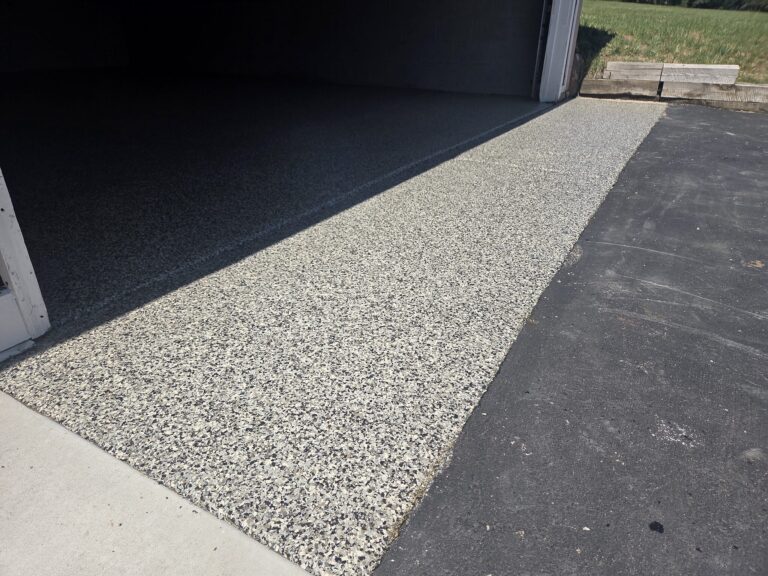
Do not assume a clear topcoat makes every underlying coating immune to color change. Sika’s Sikafloor-217 limitations specifically warn that a UV-resistant clear finish may not prevent discoloration underneath. Ask for the appearance expectations of the complete proposed system, particularly at the doorway. For floors in full sun outdoors, see coating a patio or porch; for every trade-off in one place, see epoxy garage floor pros and cons.
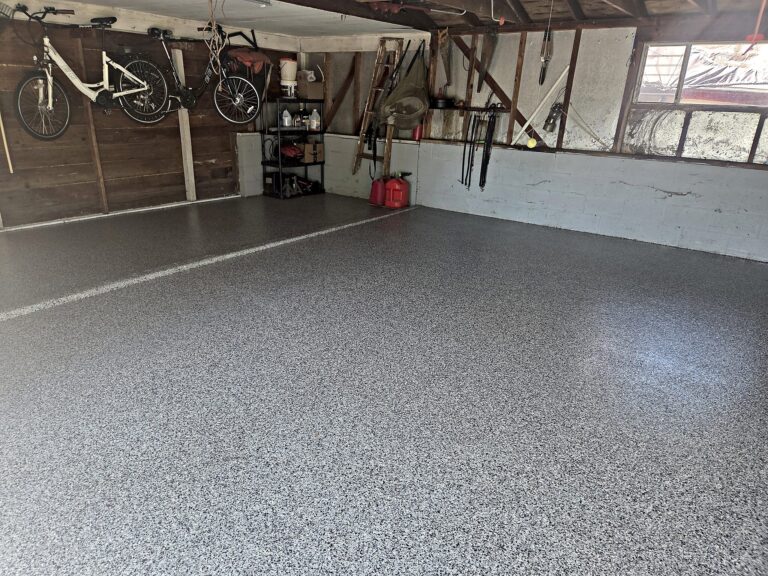
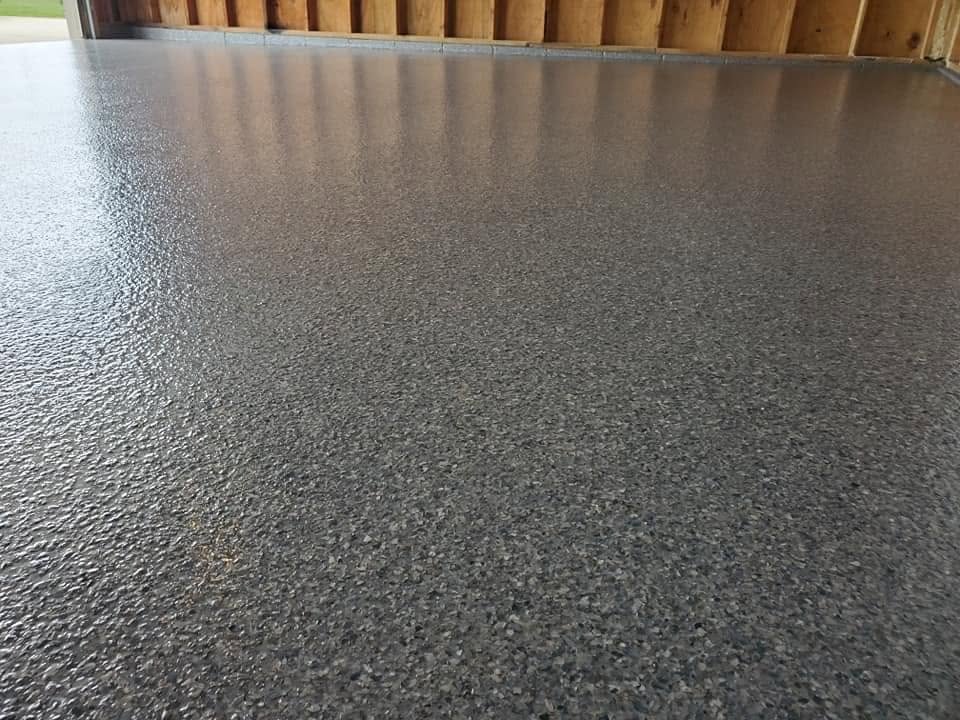
Also ask how the finished texture will feel and be maintained when wet. An attractive flake pattern should not be treated as a promise that slipping is impossible. Review an actual finished sample and discuss the traffic the floor will receive.
Which comparison questions matter most?
- Are both estimates covering the same square footage, steps, edges, and vertical surfaces?
- What happens if preparation reveals additional damage or an unsuitable existing coating?
- What testing and substrate acceptance criteria apply?
- Which products are specified rather than described only as “premium”?
- What written care instructions and warranty terms come with the work?
A lower price is not automatically a weaker system, and a faster installation is not automatically a stronger one. First establish whether you are comparing the same scope. Ask for an explanation of any important difference instead of trying to rank resin names in isolation.
How should you choose for your garage?
Bring photos, approximate dimensions, any available information about previous treatments, and your preferred parking schedule to the estimate conversation. Mention water problems and areas where an old finish has lifted. Our concrete moisture guide explains why those checks come before the decorative finish. These are reasons to investigate, not details to hide until installation day.
Midwest Painting Pros provides floor-coating estimates in Waukesha County and surrounding communities. The useful outcome is a written recommendation for your slab and how you use it—not a blanket claim that one resin wins in every garage.