
Epoxy & Garage Floor Coating
Waukesha County, WI
Midwest Painting Pros provides garage, basement, and light-commercial concrete floor coating services across Waukesha County and the greater Milwaukee area. Compare epoxy, polyaspartic, and polyurea options with preparation and repairs suited to your concrete. Start with a free written estimate for your floor, finish, and intended use.
Call or Text
262-333-9695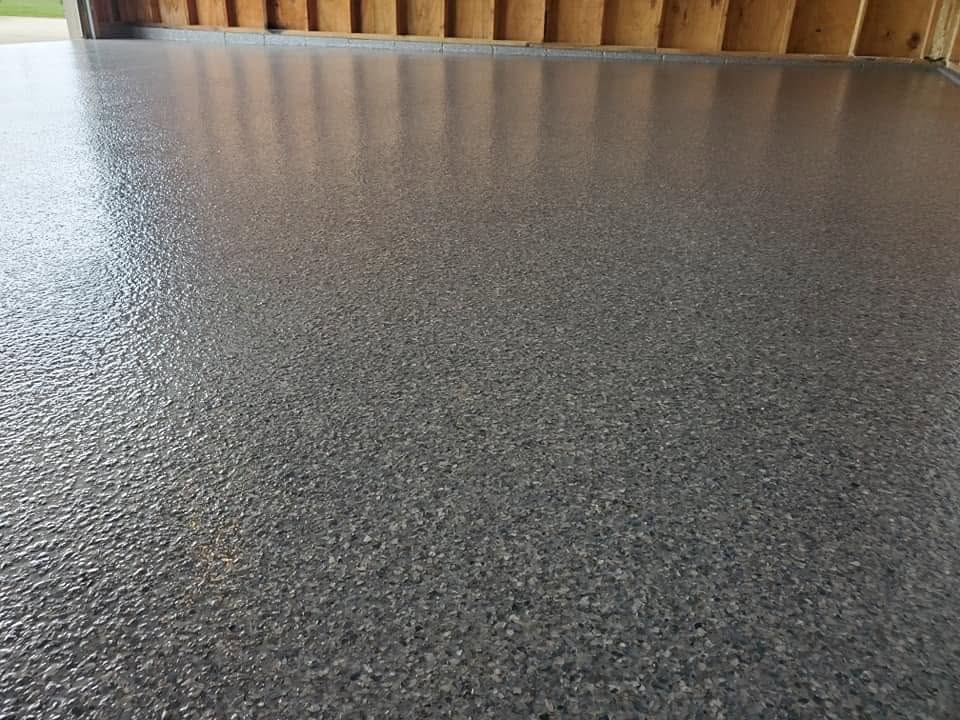
Epoxy & polyaspartic floor coating
Start with the concrete. Then choose the coating.
A useful floor-coating plan starts with the slab: existing coatings, cracks, moisture, sunlight and everyday use. Compare the preparation, repairs, base coat and protective finish together. A resin name alone does not describe the complete system.
Include parking, storage and cleaning needs in the estimate conversation. The written scope should explain preparation and agreed repairs, the proposed finish, and separate instructions for walking, moving items back and vehicle use.
- Diamond-ground or shot-blasted concrete prep
- Moisture testing on suspect slabs before coating
- Epoxy, polyaspartic, and hybrid systems — matched to your slab
- UV-stable topcoats for floors exposed to sunlight at the door opening
- Crack, pit, and spall repair before any resin goes down
- Free written estimates — no obligation
Planning Your Garage Floor
Compare the Complete Floor Coating Estimate
For a garage floor coating project in Waukesha County, compare the concrete preparation, repairs, finish, and return-to-use plan together. A resin name alone does not tell you what work your floor needs.
Concrete and Existing Coatings
Tell us about peeling paint, old epoxy, visible cracks, pitting, and damp areas. These conditions help frame the inspection and the preparation scope. Read about concrete moisture before coating.
Finish and Everyday Use
Explain whether the space is used for parking, storage, or workshop activity and whether sunlight reaches the floor. Compare epoxy and polyaspartic systems before choosing by product name alone.
Price and Access
Floor size is only part of the estimate. Existing-coating removal, repairs, access, and finish choices also matter. Our garage floor coating cost guide explains what to compare.
Parking and Storage
Plan where vehicles and stored items will go during the work. Confirm separate times for foot traffic, moving items back, and parking with the installed system; see returning a coated garage to use.
Floor Coating Services
A garage floor, a basement, and a commercial shop each need a different system — different prep, different moisture handling, different topcoat. Select a service below to see what’s involved.
Garage Floor Coating
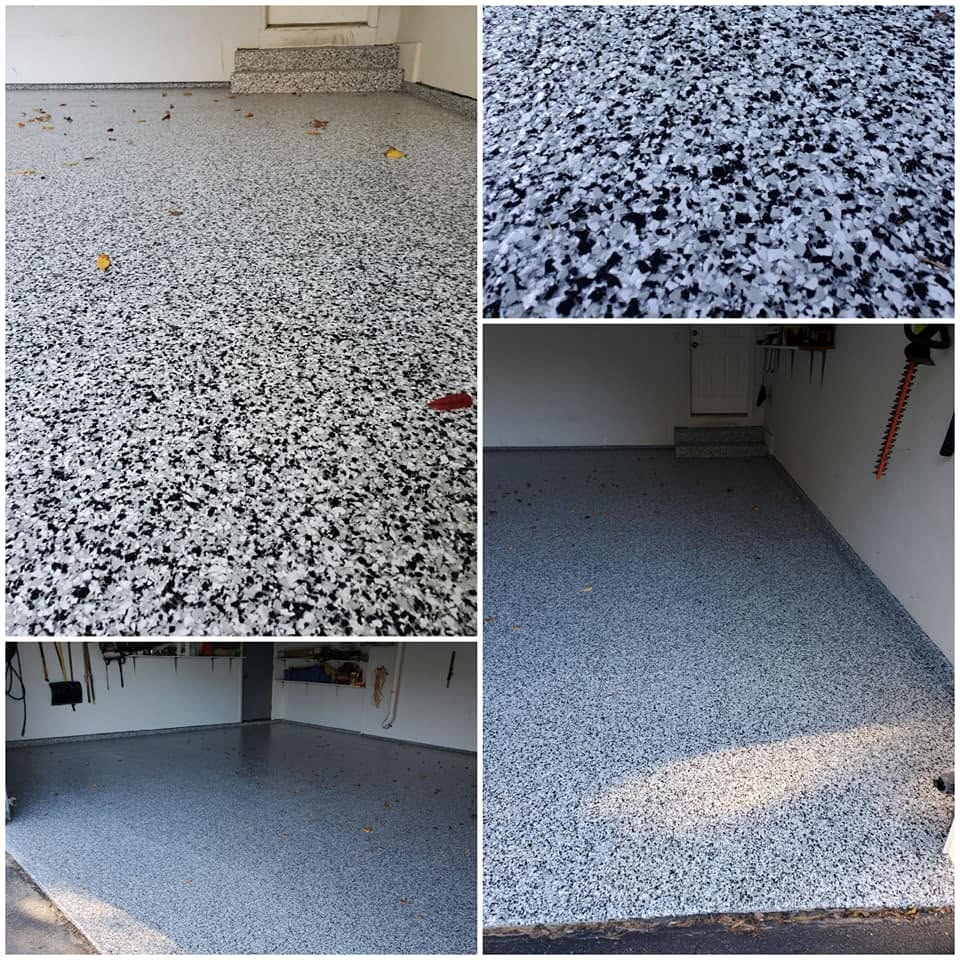
Our flagship service, and the most demanding surface a floor coating sees in Wisconsin — hot tires, road salt tracked in on melting snow, and a slab that moves with every freeze-thaw cycle. We build the system around your concrete, not a single trademarked resin. Before comparing estimates, review the garage floor coating cost factors that can change preparation and repair needs.
- Diamond-ground concrete — removes weak paste, old coatings, and contamination
- Crack, pit, and spall repair before any resin goes down
- Moisture testing on suspect slabs, with a vapor-barrier primer where needed
- UV-stable aliphatic polyaspartic topcoat for floors exposed to sunlight at the door opening
- Traction additive in the wear coat for wet, snow-covered tires
- Resistant to hot tires, oil, antifreeze, and winter deicing salt
Basement Floor Coating
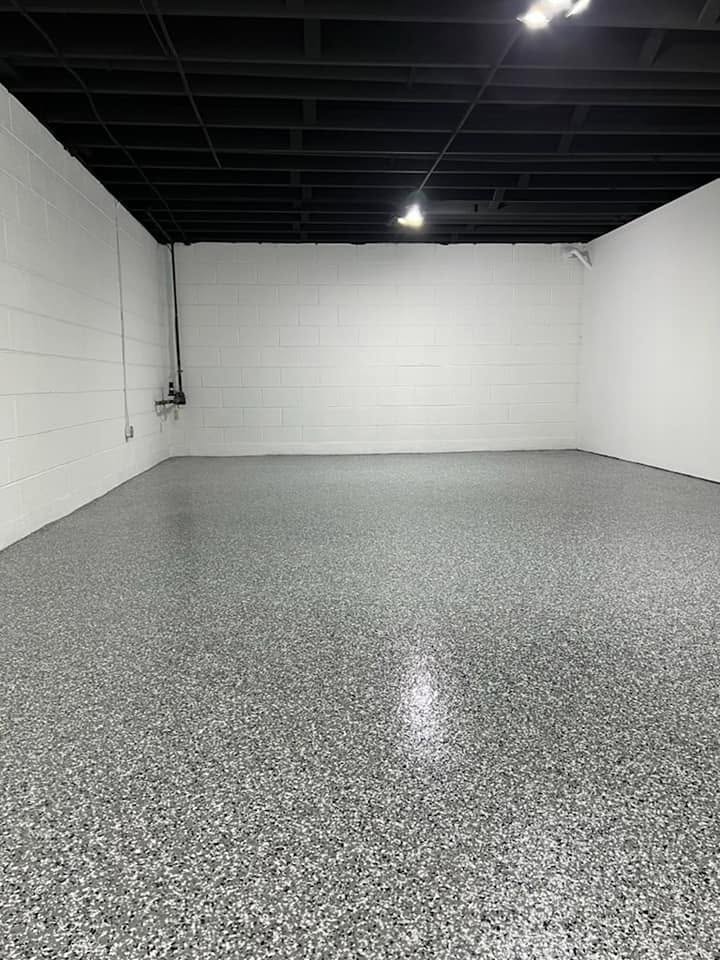
Below-grade concrete has its own set of concerns — seasonal groundwater, moisture vapor moving through the slab, and finished living space where odor during installation actually matters. We test before we coat, not after something starts bubbling. Read whether epoxy is a good choice for a basement floor.
- Slab moisture testing before encapsulating below-grade concrete
- Low-odor, low-VOC waterborne or high-solids systems for occupied spaces
- Rated vapor-barrier primer where testing calls for moisture mitigation
- Solid-color, flake, or metallic decorative finishes for rec rooms and finished lowers
- Floor defects, penetrations, and edges properly detailed before coating
- A coating seals the surface — it’s never a substitute for radon testing
Commercial & Shop Floor Coating
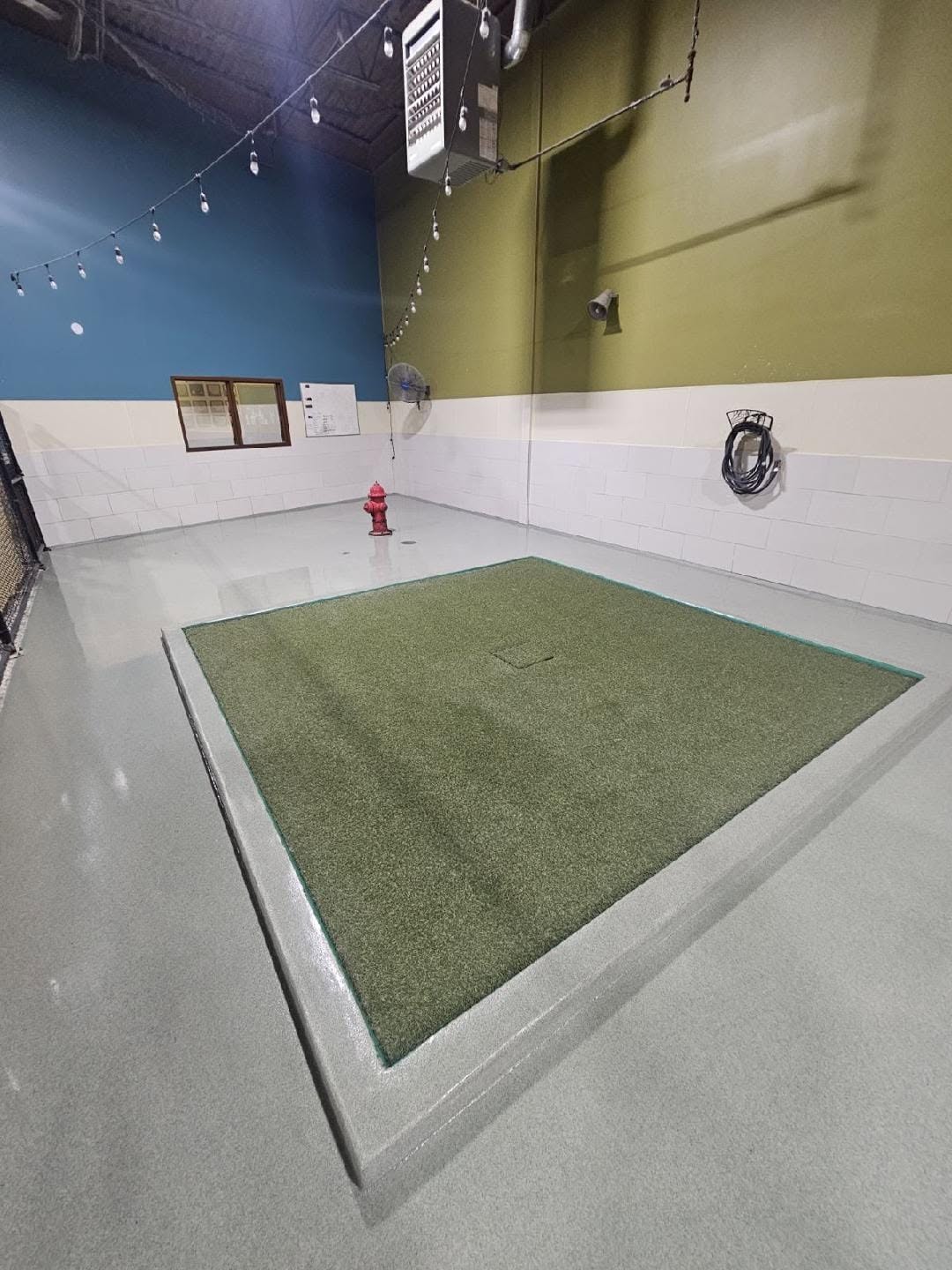
Warehouses, shops, and commercial spaces put real traffic loads on a floor — pallet jacks, forklifts, chemical exposure, and downtime that has an actual business cost. We match resin thickness and chemistry to how the space actually gets used.
- Resin and film thickness matched to traffic — foot, cart, or forklift
- Chemical resistance specified for oils, fuels, and cleaning agents on-site
- Full quartz or aggregate broadcast for high-wear, high-traction areas
- Rapid-cure polyaspartic systems where shutdown time has real cost
- Moisture mitigation for large slab-on-grade buildings
- Line striping and work-zone color separation available
Decorative Flake Floors
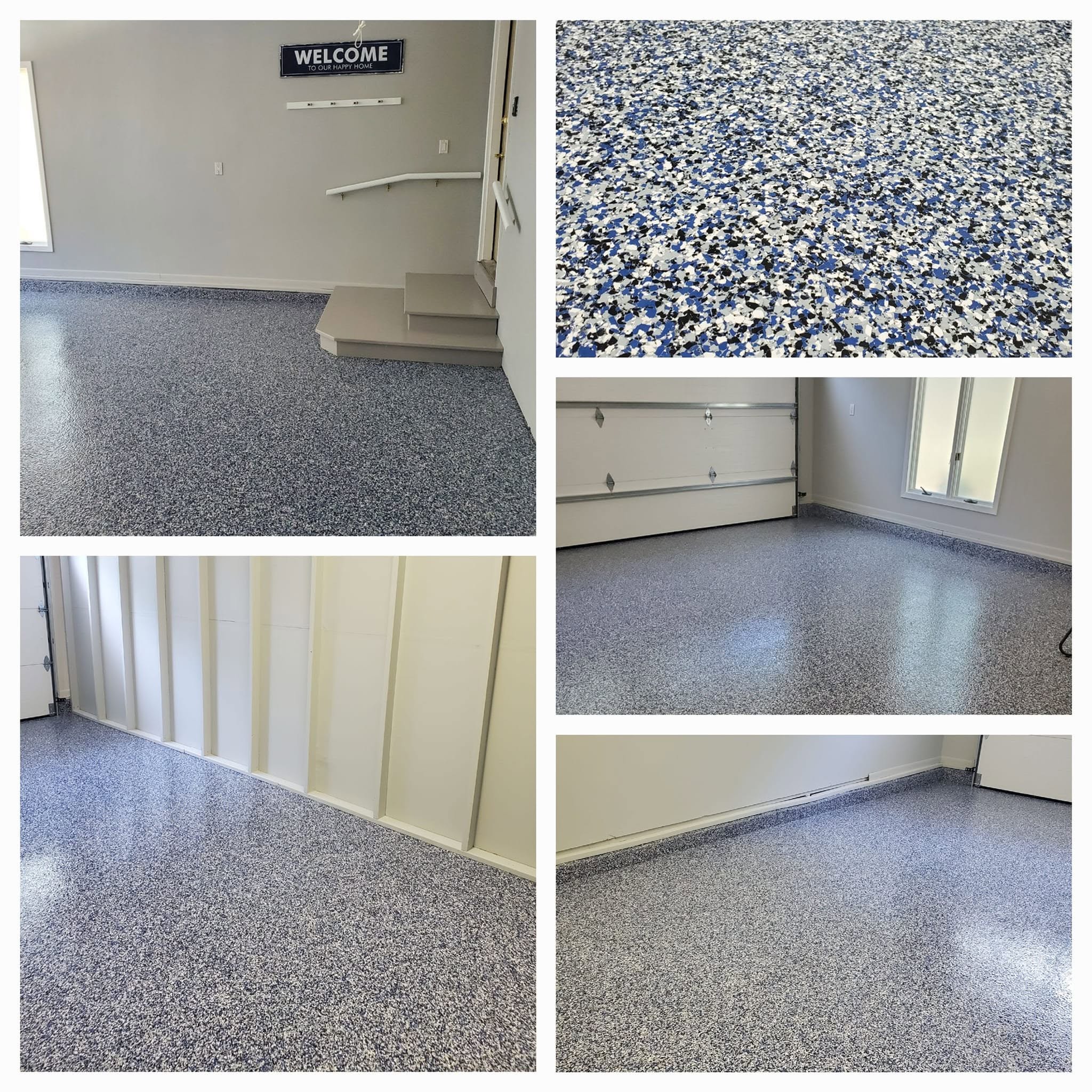
Full-flake broadcast is the look most homeowners picture when they think “epoxy garage floor” — and it does more than look good. The right clear coat over it determines whether that look holds up in direct sun.
- Pigmented resin base with broadcast vinyl flake — light accent to full coverage
- Locked in beneath one or more compatible clear topcoats
- UV-stable aliphatic clear where the floor sees sunlight, not just the flake
- Traction additive built into the final clear for wet-use spaces
- Color blends that hide dirt, salt residue, and everyday wear
- “Full flake” is a broadcast style, not a separate resin — we’re honest about the build
Metallic & Solid Color Epoxy
Metallic epoxy creates a marbled, dimensional finish that’s become popular for finished basements, bars, and showrooms. Solid-color epoxy is the clean, uniform option for workshops and utility spaces where a flake floor isn’t the goal.
- Slower-working epoxy formulas that give us time to manipulate metallic pigment
- Best suited to interior spaces, or protected with a UV-stable clear outdoors
- High-build solid-color epoxy for workshops and light commercial areas
- Optional satin or traction finish where a mirror gloss isn’t practical
- Moisture testing and primer selection handled the same as any other system
- Coating built to the actual abrasion and chemical load, not just the look
Patio & Pool Deck Coating
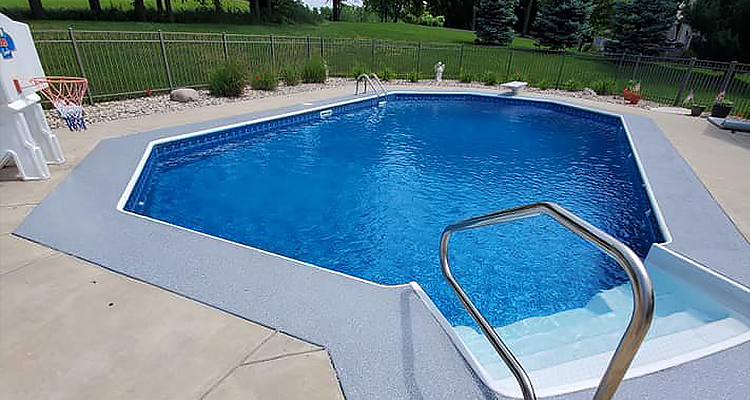
Exterior concrete coating has to survive direct sun, standing water, and Wisconsin’s full freeze-thaw cycle — a chemistry that isn’t UV-stable will chalk and yellow fast outdoors. We spec exterior work differently than an interior garage floor.
- Aliphatic, UV/color-stable finish chemistry for exposed exterior work
- Mechanical prep and deterioration repair before coating — no encapsulating loose concrete
- Wet-use traction added around pools, steps, and frequently rained-on patios
- Systems selected for exterior thermal cycling and water exposure
- Expansion and movement joints preserved, not just disguised
- Protects a sound slab surface — doesn’t stop underlying frost heave
A Clear Path Forward
From slab assessment to a finished floor
Preparation, coating and return to use each need their own place in the plan.
Assess and specify
Review the concrete, existing finish, moisture concerns and intended use. Agree on repairs, coating layers, finish and access before setting the schedule.
Prepare and coat
Complete the specified surface preparation and repairs, then apply the agreed base, decorative finish and protective coat. The sequence depends on the system selected.
Cure and return to use
Review the finish and written care instructions. Confirm walking, storage and parking separately; application completion is not the same as full cure.
Compare the Whole System
Epoxy or polyaspartic: what actually changes?
Compare the base, finish coat and intended exposure together. Coatings within the same resin family can have different application limits and traffic schedules.
Epoxy base layers
Epoxy can provide build and a base for decorative finishes. Moisture tolerance, preparation and cure requirements belong to the specific product, not the epoxy name alone.
Polyaspartic finishes
Some products offer faster traffic readiness and UV resistance. Confirm the exact coating’s suitability for sunlight, cleaning chemicals and the intended use.
Compatible combinations
A system may combine different coating families. Each layer must be compatible, with the specified recoat window, surface preparation and finish texture.
Manufacturer Data, Not a Universal Promise
How much can temperature change the wait?
For one epoxy example, the published foot-traffic time changes from about 8 hours at 68°F to 24 hours at 50°F. The table shows why a single “ready tomorrow” claim cannot describe every floor.
| Product and temperature | Foot traffic | Full cure |
|---|---|---|
| Sikafloor-217 epoxy, 50°F | About 24 hours | About 10 days |
| Sikafloor-217 epoxy, 68°F | About 8 hours | About 7 days |
| Sikafloor-515 polyaspartic, 68°F | About 4 hours | About 5 days |
Floor Coating Across Waukesha County & Beyond
Midwest Painting Pros is based in North Prairie, and most of our floor coating work is right here in Waukesha County — Waukesha, Pewaukee, Brookfield, Mukwonago, Oconomowoc, you name it. We’ve coated garage floors, basements, and commercial shops all across the area.
We also take jobs out into Milwaukee, Jefferson, Walworth, and Racine Counties pretty regularly. If it’s a fit for our schedule, we’ll drive to it — distance has never stopped us from taking on a good project.
Every slab is a little different, and we’ve coated most of them — older Waukesha garages with decades of oil stains and salt damage, newer builds out past Waterford and Ixonia with concrete still curing, and finished basements near the lakes where moisture testing matters more than anywhere else. We adjust the system to the concrete, not the other way around.
Not sure if you’re in our range? Just call. Most of the time the answer is yes, and if it’s a stretch we’ll tell you straight rather than waste your time.
Our Work
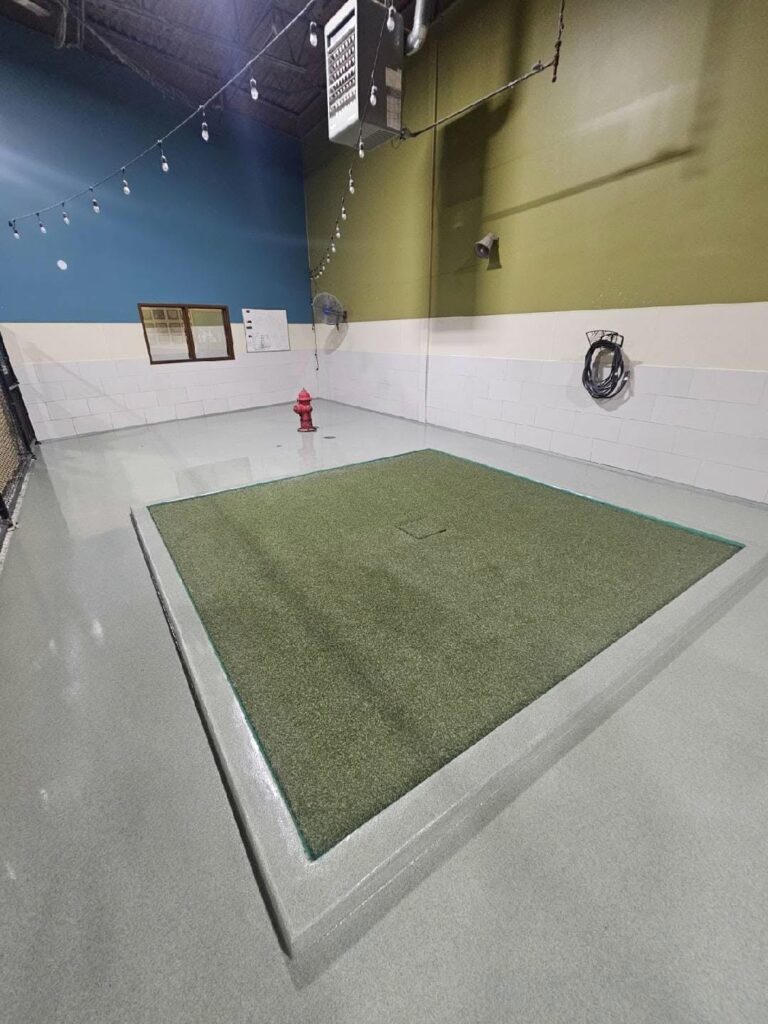
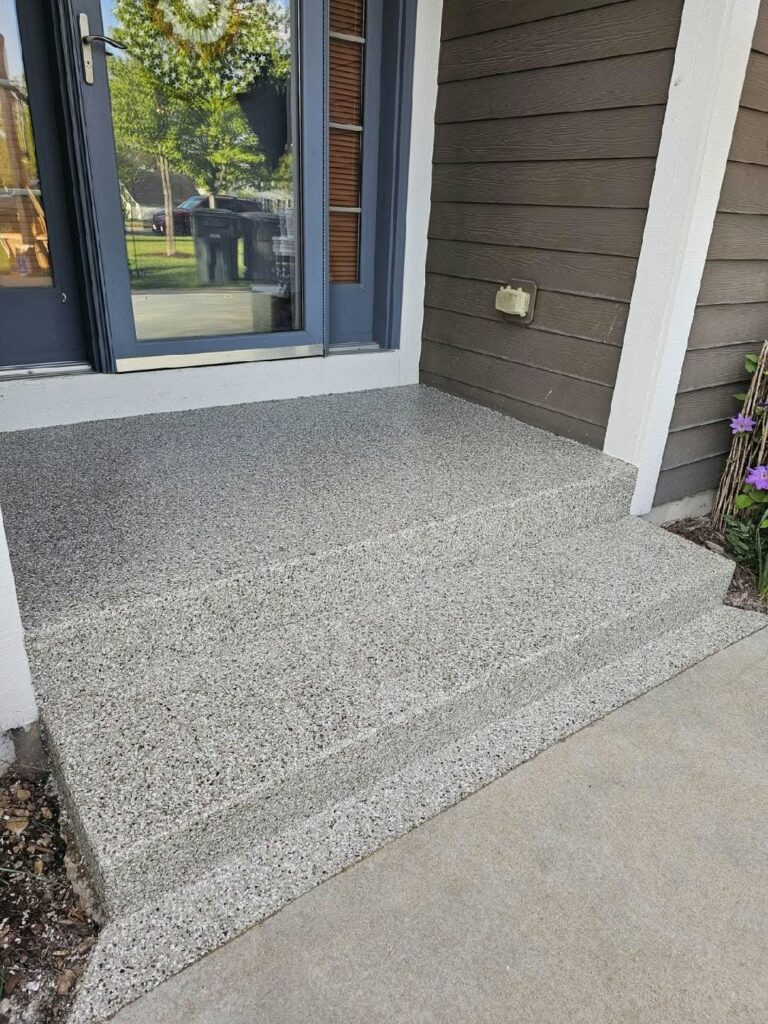
Recent Epoxy Projects
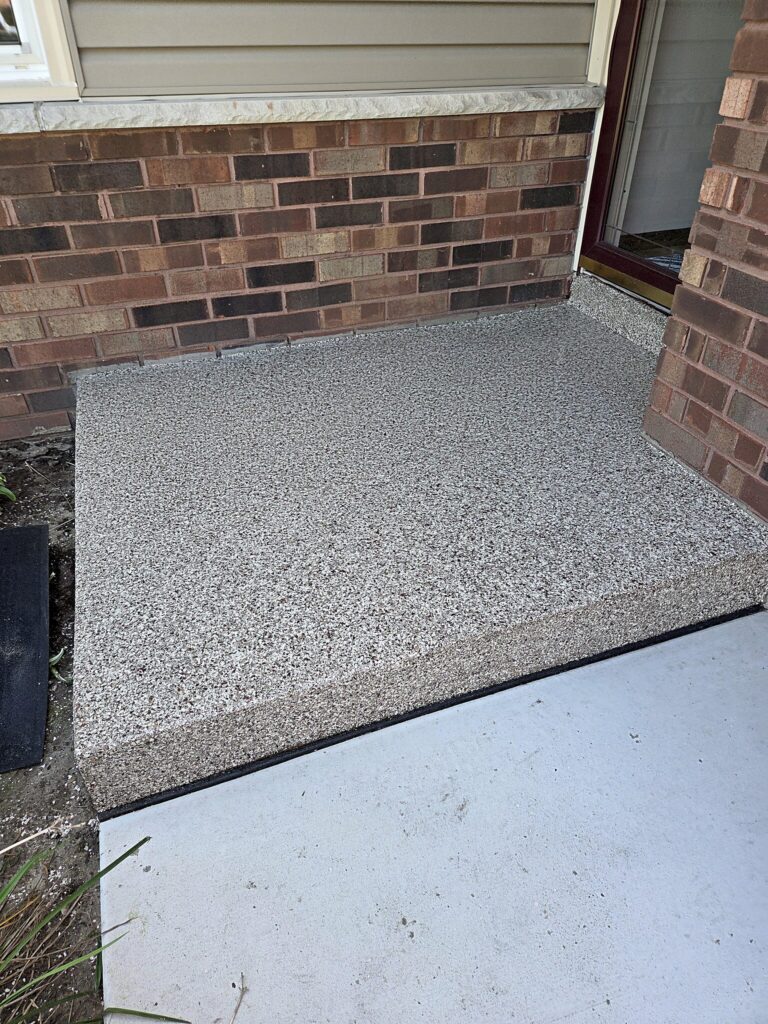
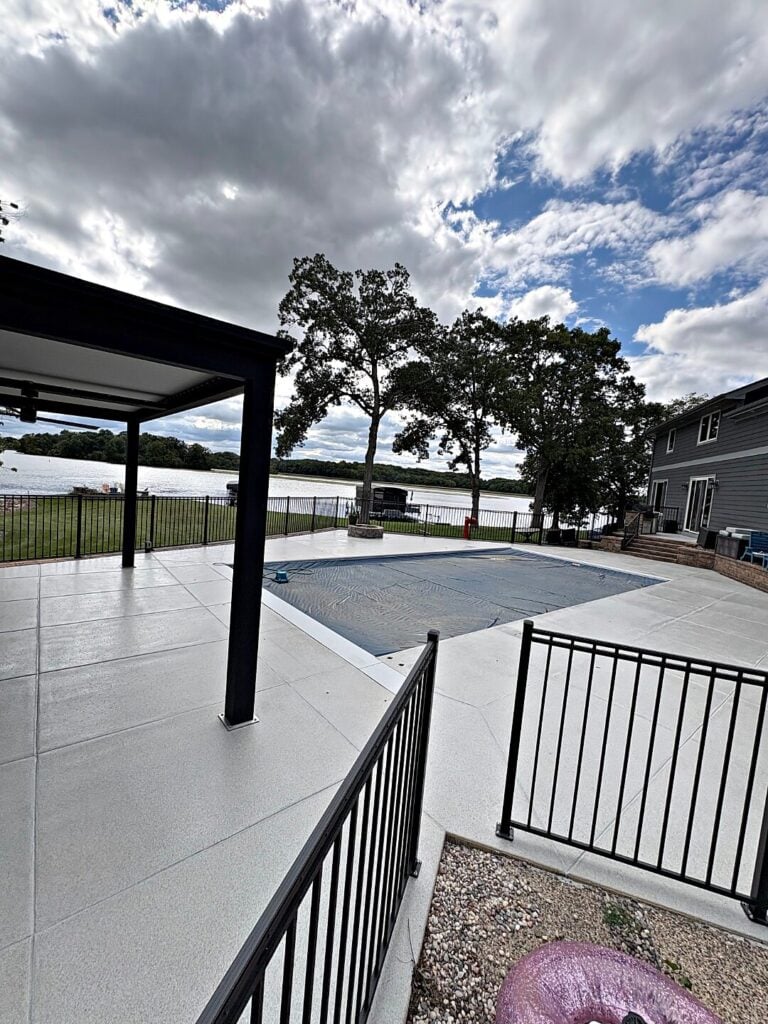
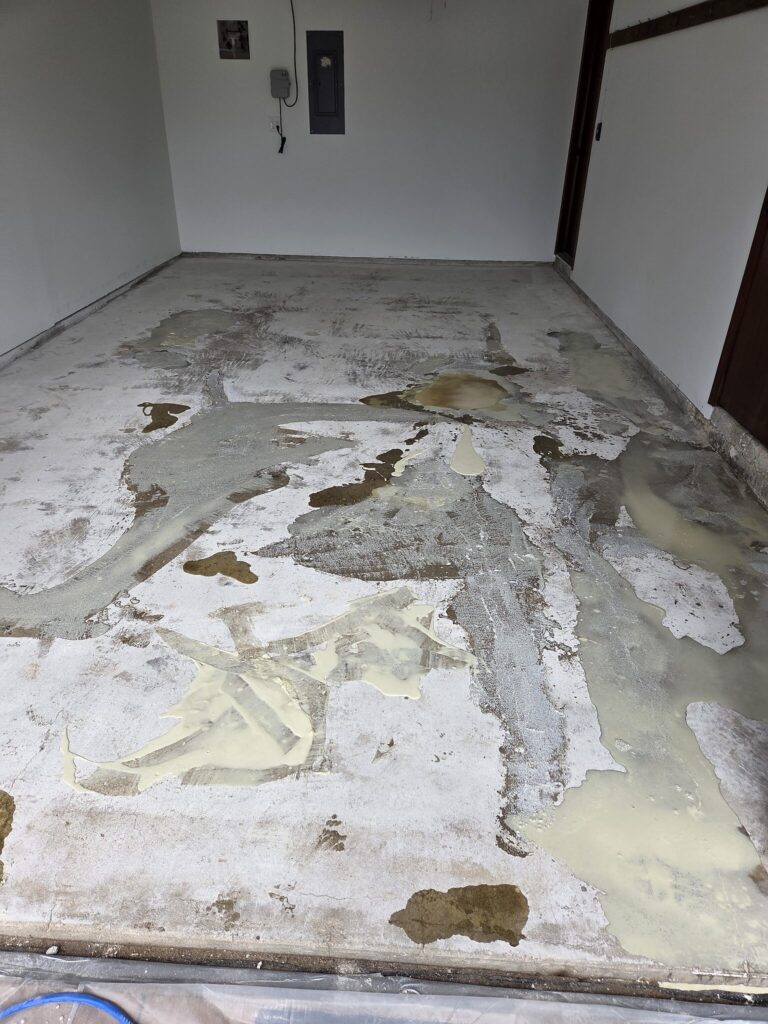
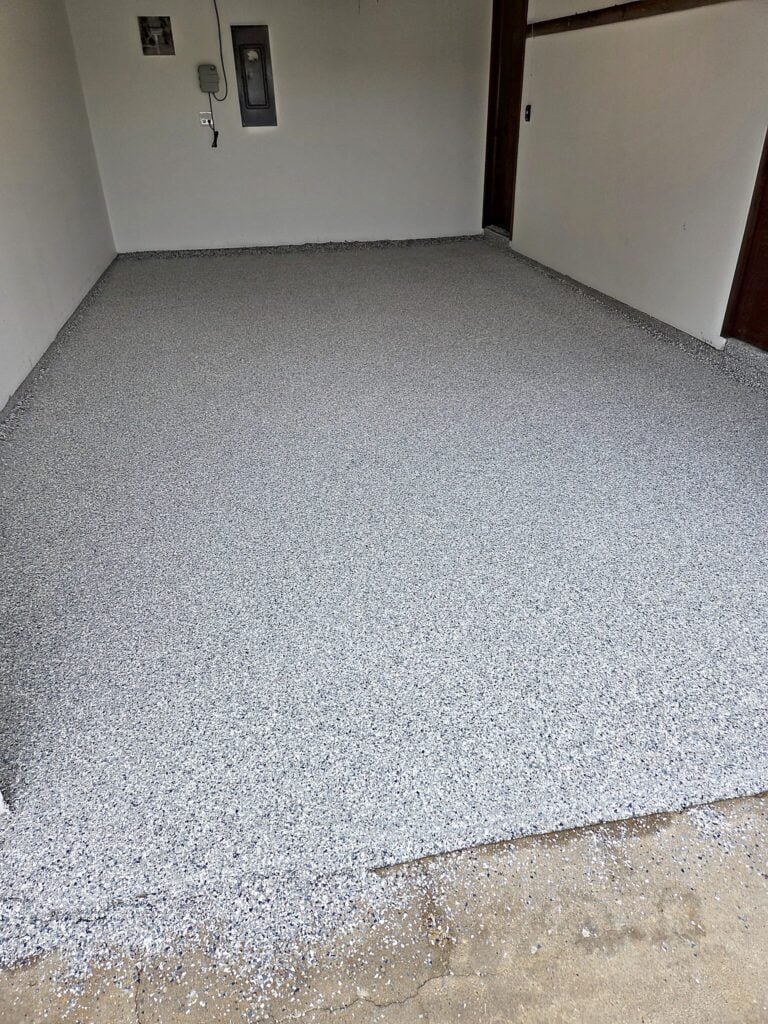
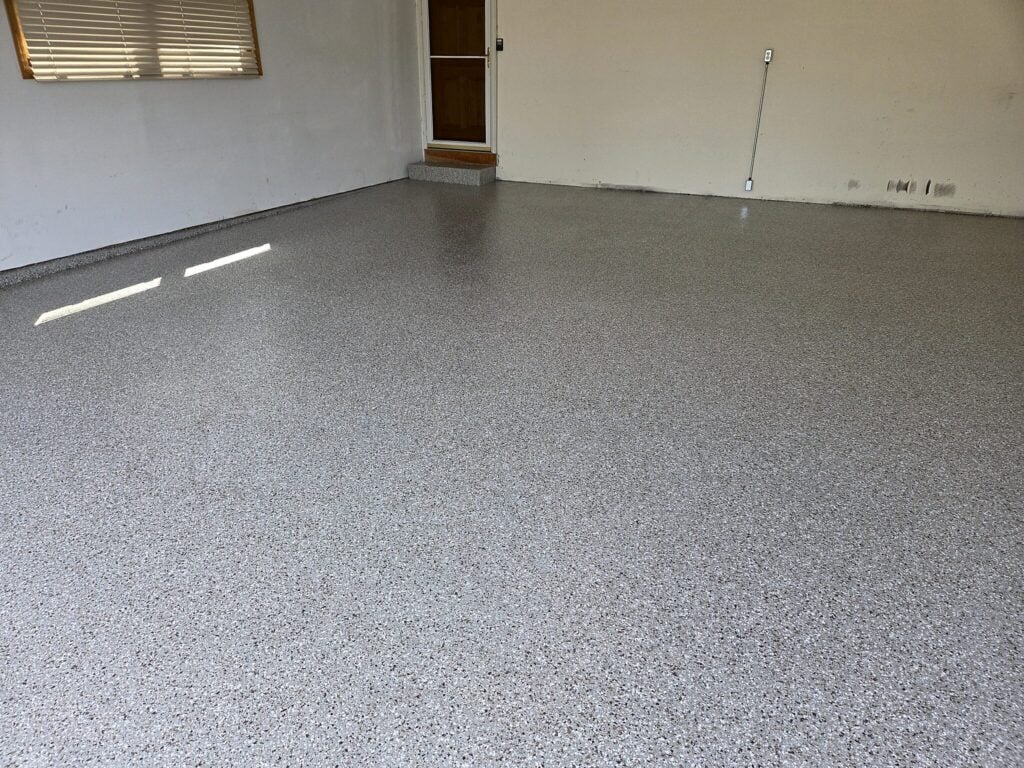
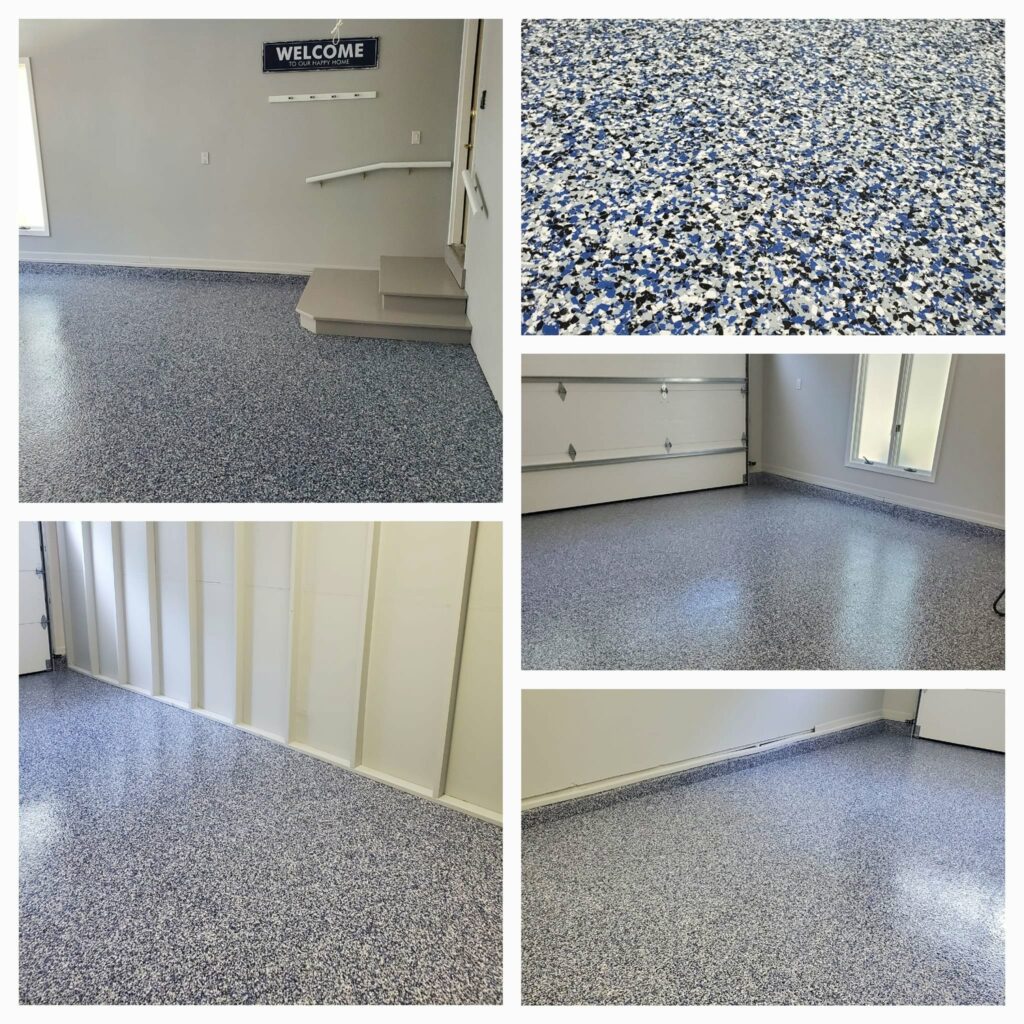
Real jobs, real results — across Waukesha County and surrounding areas. View all floor-coating projects.
Ready to see what we can do for your home?
Every project starts with a free on-site estimate — no pressure, no obligation.
Cost & Value
The biggest price difference is usually not the resin brand printed on the container. Professional pricing includes diamond grinding or equivalent mechanical prep, crack and pit repair, masking and edge work, resin at the specified film build, decorative flake or aggregate, and one or more protective topcoats.
We provide free, detailed written estimates so you know exactly what’s included before any work begins.
A retail home-center kit is inexpensive on its own, but that price doesn’t include grinder rental, crack repair, degreasing, or the homeowner’s own labor – and even with all of that added in, it still doesn’t replicate professional mechanical surface prep, which creates the bond profile the coating actually needs.
Film build matters too: a carrier-based DIY epoxy applied at 7 wet mils may finish at only 3 to 3.5 dry mils once it evaporates, while professional 100% solids systems commonly build 10 mils or more. Comparing two products just because both say “epoxy” is like comparing a stain to a high-build industrial coating.
We look at concrete condition, existing coatings, cracks, pitting, and staining, then tell you exactly what prep and system we recommend and why – not just a per-square-foot number with no explanation behind it.
We distinguish dormant shrinkage cracks from active, moving joints. A resin coating can bridge minor surface cracks, but it can’t stabilize a structurally moving slab – if a crack is still active, we’ll tell you honestly rather than paint over a problem that’s going to come back.
System Selection
Full flake dominates local garage marketing for good reason – it hides dirt, salt residue, and everyday wear better than a uniform gloss floor. Metallic epoxy is better positioned for interior decorative spaces where direct sun isn’t a factor, unless it’s protected with a UV-stable clear. Whatever finish you choose, the clear topcoat over it needs to match the sun exposure the floor will actually see.
A conventional aromatic epoxy clear left in direct sun will amber and chalk over time – that’s the wrong chemistry for an exposed patio or pool deck. Aliphatic polyaspartic is built for exactly this kind of weather exposure, which is why it’s our default recommendation for exterior concrete coating projects. See coating a patio or porch in Wisconsin.
Climate & Timing
Slab temperature matters more than turning on a space heater for an hour and measuring warm air. A representative waterborne epoxy takes roughly 18 hours to foot traffic and 3 days to full cure at 73°F, but around 36 hours to foot traffic and 5 days to full cure at 50°F – the same pattern holds for most resin chemistries.
Our rule is simple: we verify slab temperature against the exact product data sheet before we coat, rather than assuming every product tolerates a cold Wisconsin garage the same way.
Humidity and dew point affect application as much as temperature does. Wisconsin spring and fall weather can leave a cold slab lagging behind warmer, humid air, which is exactly the condition that causes condensation problems at the bond line. We check both before we commit to a start date.
Prep & Moisture
This matters especially on an older Wisconsin garage floor that’s seen years of oil, tire residue, sealers, and road salt. A coating is only as well bonded as the concrete beneath it – a more expensive topcoat can’t compensate for coating over contamination or weak cement paste.
Professional moisture-barrier systems can handle conditions far beyond what a normal finish coat is rated for – but those numbers belong to the dedicated moisture-barrier layer specifically, not every epoxy or polyaspartic floor generically.
This is especially relevant for a Wisconsin basement, since below-grade moisture can change with rainfall, snowmelt, and groundwater conditions. A floor that tests dry today doesn’t guarantee low vapor pressure year-round, which is why we consider future conditions – not just the day-of reading – when we recommend a system.
New concrete continues releasing moisture as it cures, which is exactly the condition that causes coating failures if it’s ignored. We’ll assess slab age and moisture together rather than coating on a fixed calendar date regardless of the actual concrete condition.
Recoating sound existing resin is only done after we verify adhesion and compatibility between the old and new systems, and confirm what preparation the new coating actually requires on top of it. Encapsulating a peeling or delaminating floor just hides the problem temporarily – it doesn’t fix it. See why painted garage floors peel.
Durability & Care
A seamless, properly cured coating reduces the concrete’s direct exposure to that chloride load, which is why keeping chips, gouges, and delaminated spots repaired is worth doing rather than ignoring. Driving on a coating before it’s developed full chemical and traffic resistance – especially with warm tires and winter contaminants together – is the scenario most likely to shorten its life.
A damp mop or standard floor cleaner handles most day-to-day maintenance. The main things to avoid are letting chloride-laden slush sit for extended periods and using abrasive pads or harsh solvents that aren’t approved for the specific topcoat installed.
Finish & Warranty
Full-flake floors add texture, but a heavily buried flake broadcast under a thick, smooth clear can still feel slick – the final topcoat texture is what actually determines grip, not the flake alone. We avoid absolute claims like “non-slip” and instead add traction appropriate to how wet the space realistically gets. More in epoxy garage floor pros and cons.
If you have radon concerns, that’s a conversation for a radon-testing professional first. We’re glad to coordinate around an existing or planned mitigation system, but we won’t market a floor coating as a fix for something it doesn’t actually resolve.
Ask us to explain the written coverage and how to report a concern before work begins. Product warranties and installation coverage are separate, so compare the terms for the proposed system.
Have a question not answered here? Call or text us – we’re happy to help before you commit to anything.
262-333-9695 Get a Free EstimateFloor Coating & Local Client Reviews
What Our Clients Say
We had our garage floor done with epoxy and it looks great!! Chad was awesome to work with and his crew was wonderful. We have already recommended him to some friends.

Outside of house paunted in 2022, last month garage floor and front walk epoxy'd, yesterday interior painting. Reasonable, puntual, very detailed workers. 10's all the way!

Chads painters and carpenters did a great job. They are very respectful and knowledgeable.

We purchased our first home and had Chad and Midwest Painting Pros do a full interior paint job including trim and ceilings. From the initial meeting to quote the project through completion, Chad and his team were wonderful to work with. Chad was collaborative, fair, and communicated really well during the whole process. His team was professional and friendly, and did an excellent job. We love how our home transformed. We will call Chad and Midwest Painting for all of our future painting needs. Highly recommend.

We recently moved and found Chad through a sign in our old neighborhood. We were on a tight deadline to get our new house painted before we moved in - Chad and his team went above and beyond! He was great to work with and did exceptional work. They are coming back in October to fix some trim on our house. I highly recommend using Midwest Painting Pros for top notch service and results!

We recently had our basement painted by Midwest Painting Pros, and we couldn't be happier with the results. Chad was able to accommodate our project on very short notice, which we greatly appreciated. Chris and Tyler were fantastic to work with from start to finish. They were professional, courteous, and paid great attention to detail. The quality of their work was outstanding, and our basement looks amazing. We highly recommend Midwest Painting Pros to anyone looking for quality painting services and excellent customer service!
