Why is garage size only the starting point?
A “two-car garage” is not a measured scope. One quote may include only the main slab, while another covers a step, a raised concrete border, or an adjoining storage area. Before comparing totals, ask both contractors to identify the same boundaries.
Measure the main slab
For a rectangular area, length × width gives square feet. An illustrative 20 × 22-foot slab is 440 square feet; a 24 × 24-foot slab is 576. The second has about 31% more area even if both are described as two-car garages.
Separate the extras
Steps, vertical borders, old-coating removal and repairs can add work without adding much flat floor area. Ask for these as included items, allowances or separate options.
Dimensions are calculation examples, not measurements of an MPP project or local garage-size averages. More area does not mean the total price rises by exactly the same percentage.
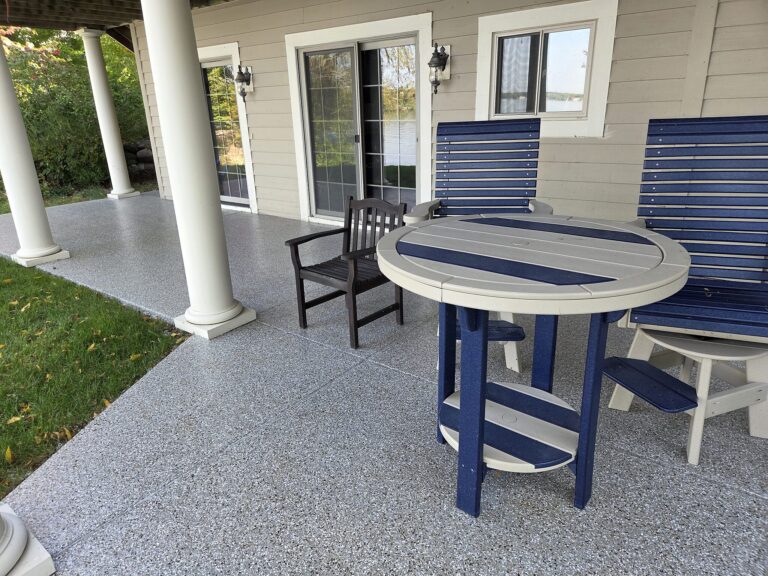
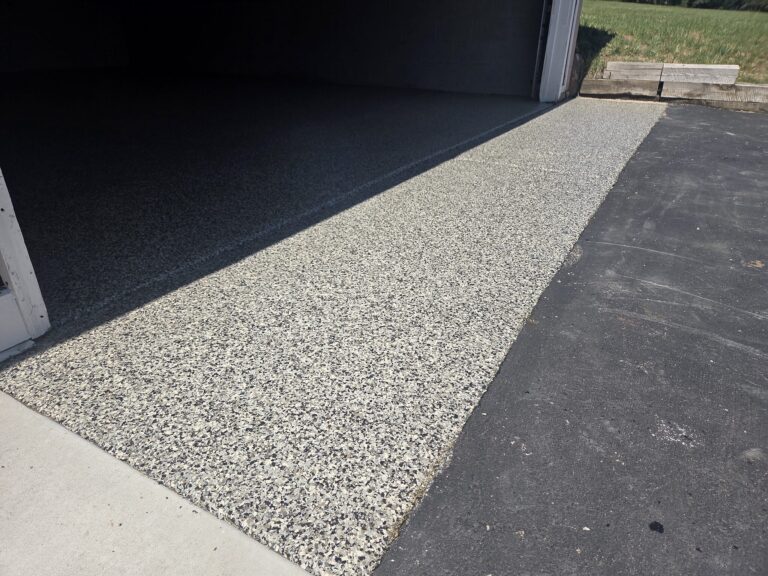
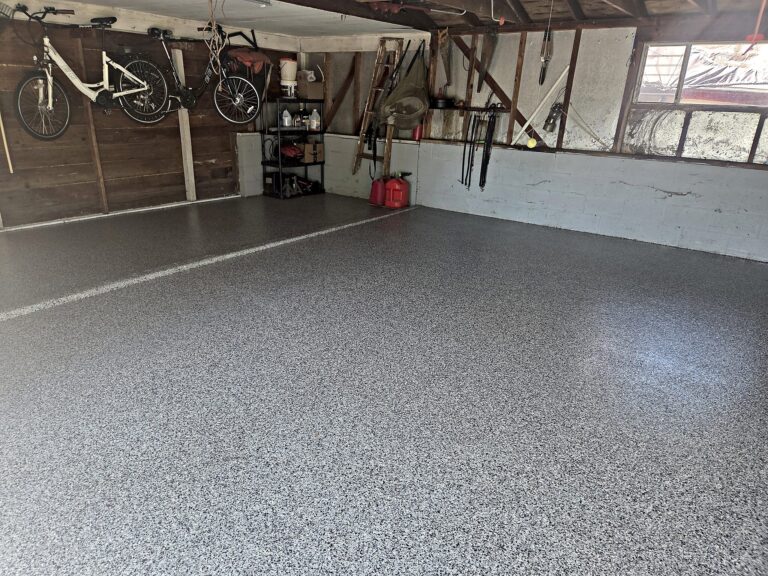
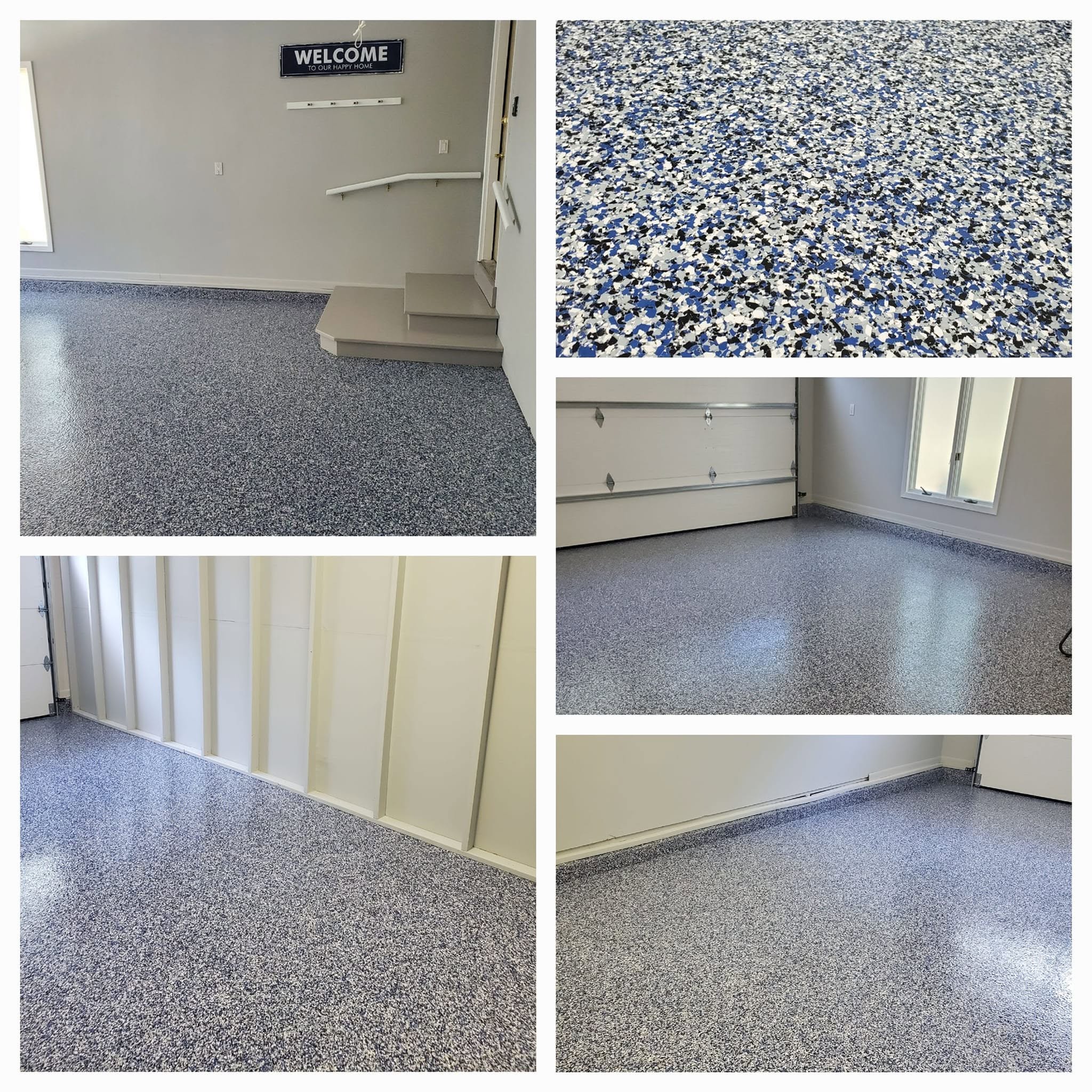
Write down which areas you want included and which you want priced separately. Photographs can help start the conversation, but they do not replace measurements or inspection. A finished photograph also cannot tell you how much preparation was required underneath.
What does that work out to per square foot?
Roughly $4.50 to $14.50 per square foot across our two-car range, which is why a per-square-foot number on its own is a poor way to compare quotes. The low end is $2,600 spread over a 576-square-foot slab; the high end is $5,800 on a 400-square-foot slab that needs more removal, repair or a fuller system.
| Slab | Sq ft | $2,600 | $5,800 |
|---|---|---|---|
| 20×20 | 400 | $6.50 | $14.50 |
| 20×22 | 440 | $5.91 | $13.18 |
| 24×24 | 576 | $4.51 | $10.07 |
How much does a 20 × 20 epoxy floor cost? A 400-square-foot slab sits at the small end of our two-car range, so it plans within $2,600–$5,800 depending on preparation and finish. Parts of the job, such as setup, grinding the edges and the time each layer needs, do not shrink in proportion to the floor, so smaller floors usually cost more per square foot.
We have not published ranges for one-car or three-car garages, basements or large shop floors. Those are priced from measurements and the slab’s condition; send dimensions and photos for a written number.
What should preparation and repairs include?
Ask how the contractor will evaluate the existing slab and any old finish. Then ask what preparation is in the base price and what would trigger an additional allowance. A quote that simply says “prep floor” leaves room for different expectations.
- Is removal of the existing coating included?
- Which visible damaged areas are covered by the repair scope?
- How are joints and transitions being treated?
- What happens if the prepared surface reveals a condition that was not visible during the estimate?
- Will additional work require your approval before it proceeds?
For technical context, Sherwin-Williams emphasizes evaluation of the concrete before selecting resin flooring. That does not mean every residential slab needs every available test; it means the inspection should guide the specification. Read its substrate-evaluation guidance.
How does the finish change the comparison?
Compare named layers, not just the word “epoxy.” Ask what primer or basecoat, decorative treatment, and topcoat are included. If you are comparing a simple solid appearance with a decorative flake finish, get each option described separately.
For a clearer resin comparison, see epoxy versus polyaspartic systems. If moisture work is proposed, use our moisture-testing guide to understand the method and product limit behind it.
Discuss the finished sample as well as the label. How much texture do you want? What will cleaning involve? Are steps included in the same finish? The goal is not to buy the most elaborate system; it is to understand what the proposed system is intended to do.
Which costs may sit outside the coating quote?
| Planning item | Clarify before booking |
|---|---|
| Emptying the garage | Who moves shelves, appliances, tools, and stored items? |
| Temporary storage | Where will contents stay while the floor is unavailable? |
| Access | Is another entrance available during the work? |
| Return to use | When can cars and heavy items return? |
| Other repairs | Are drainage, structural, or door repairs separate? |
These questions help you plan the whole project even if some items are not services the coating contractor provides. Do not assume clearing the garage is included because cleanup after coating is included.
Is a professional coating worth it compared with a DIY kit?
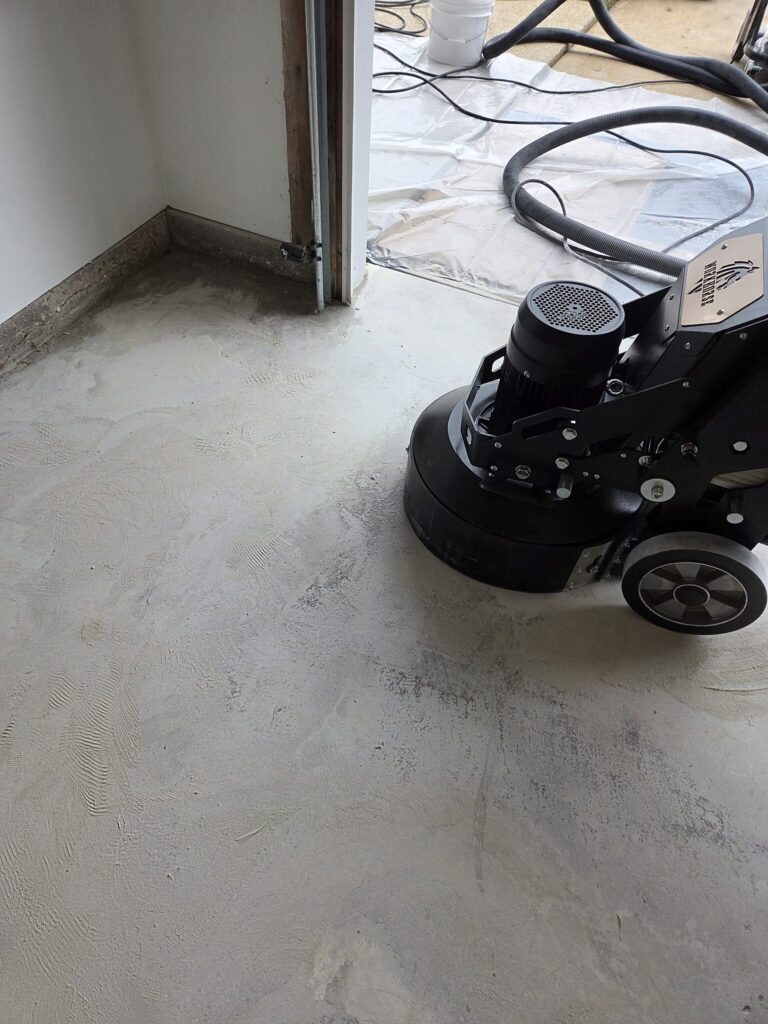
The difference is mostly what happens before the coating goes down. A home-center kit can cost a few hundred dollars, but it usually relies on cleaning or etching rather than mechanical grinding, has little or no repair step, and goes on as a thin film. A professional floor adds moisture assessment where warranted, diamond grinding, crack and pit repair, a full broadcast layer, and a topcoat selected for vehicles and winter salt. Whether that is worth it depends on how you use the garage and how long you want the floor to look and perform well. If you are weighing a painted floor instead, see garage floor paint vs. epoxy.
What a Midwest Painting Pros floor estimate includes
- An on-site look at the slab: condition, existing coatings, cracks, pitting and staining, with moisture assessment where warranted.
- A written scope naming the preparation (mechanical grinding), the repairs, and the coating system and finish.
- A project timeline and a fixed written price before you commit.
- Our 2-year limited warranty on floor coating work, with terms in the proposal.
If you are still deciding on a system, compare epoxy and polyaspartic coatings; for basements, see whether epoxy suits a basement floor.
How do you compare two estimates fairly?
Make one shared scope sheet and ask each contractor to respond to it. Wisconsin DATCP recommends obtaining written estimates for the same work and making sure agreements document the project. Read its home-improvement consumer tips.
For example, one hypothetical quote could exclude an old coating’s removal while another includes it. The lower total would not establish better value until that difference is resolved. Treat unclear line items as questions, not immediate proof of poor workmanship.
Ask about payment stages, changes to scope, cleanup, and the written warranty. Keep these alongside the product specification so a sales conversation does not become the only record of what was agreed.
What should you send for a local estimate?
Share the property address, approximate dimensions, wide photos, close-ups of areas that concern you, and any known history of sealing or coating. Include the dates when you can realistically keep the garage empty.
For a written price based on your slab, preparation and selected finish, see Midwest Painting Pros’ epoxy and garage floor coating service.