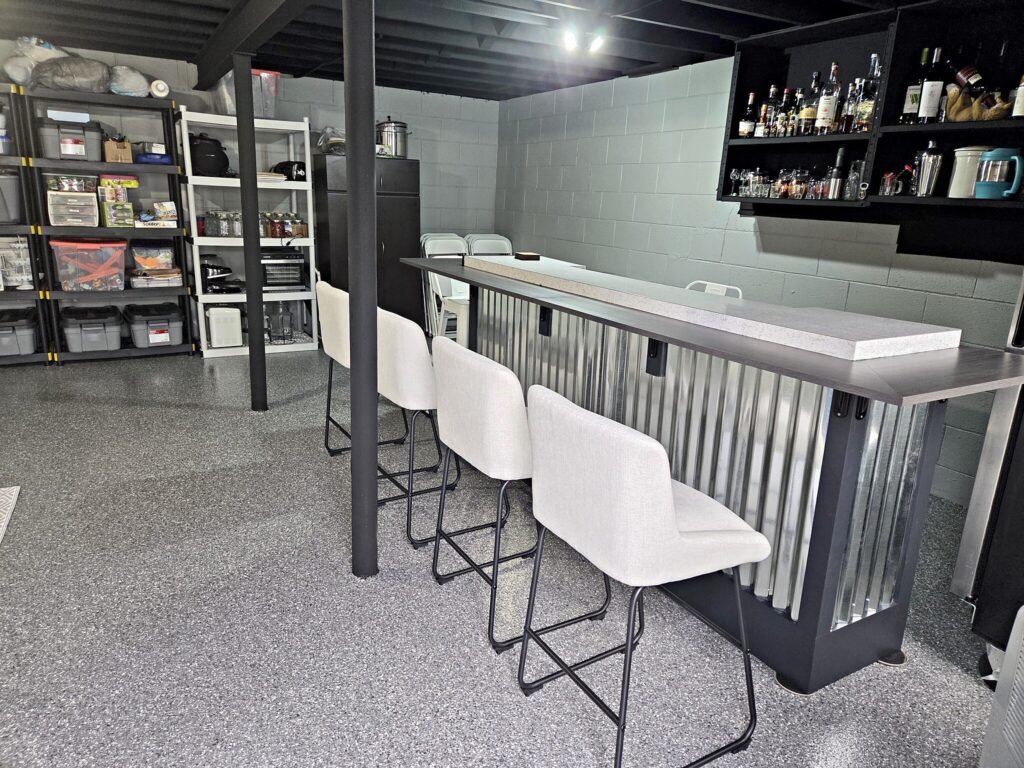
When does a coated basement floor make sense?
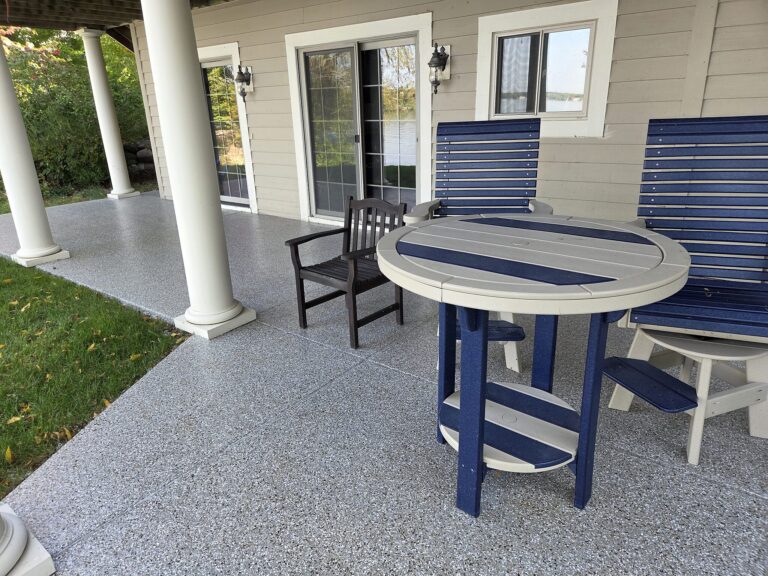
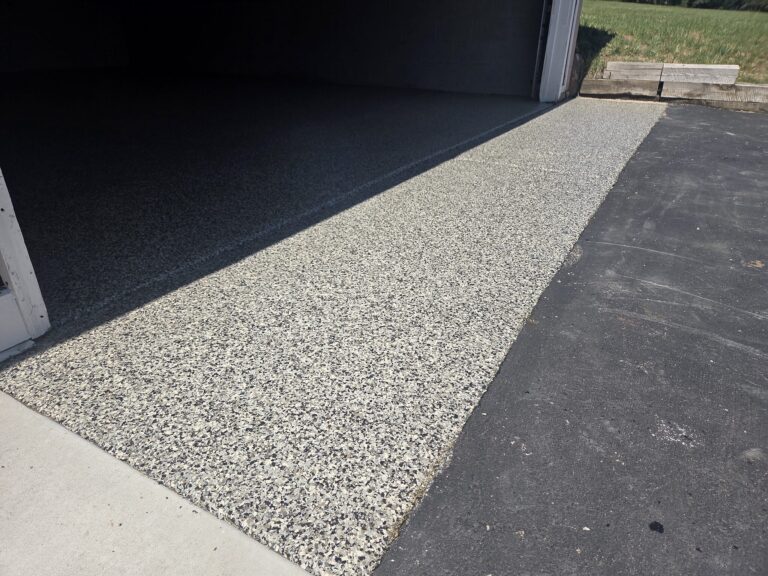
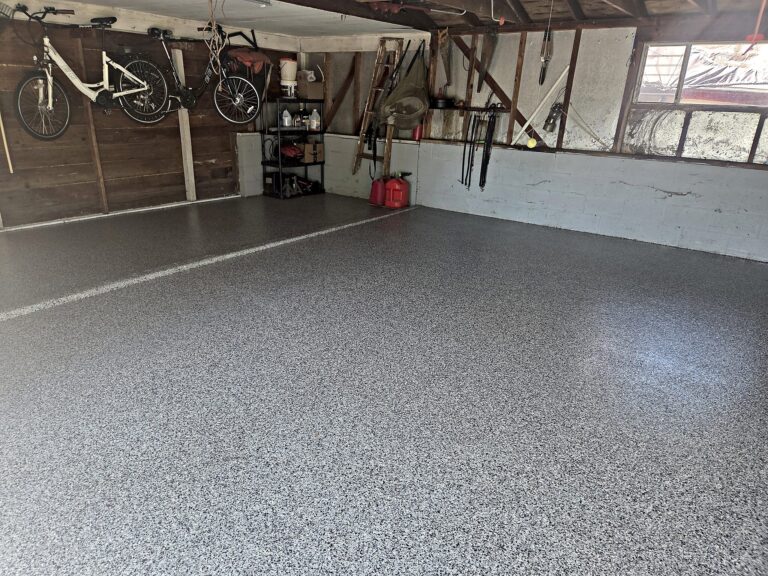
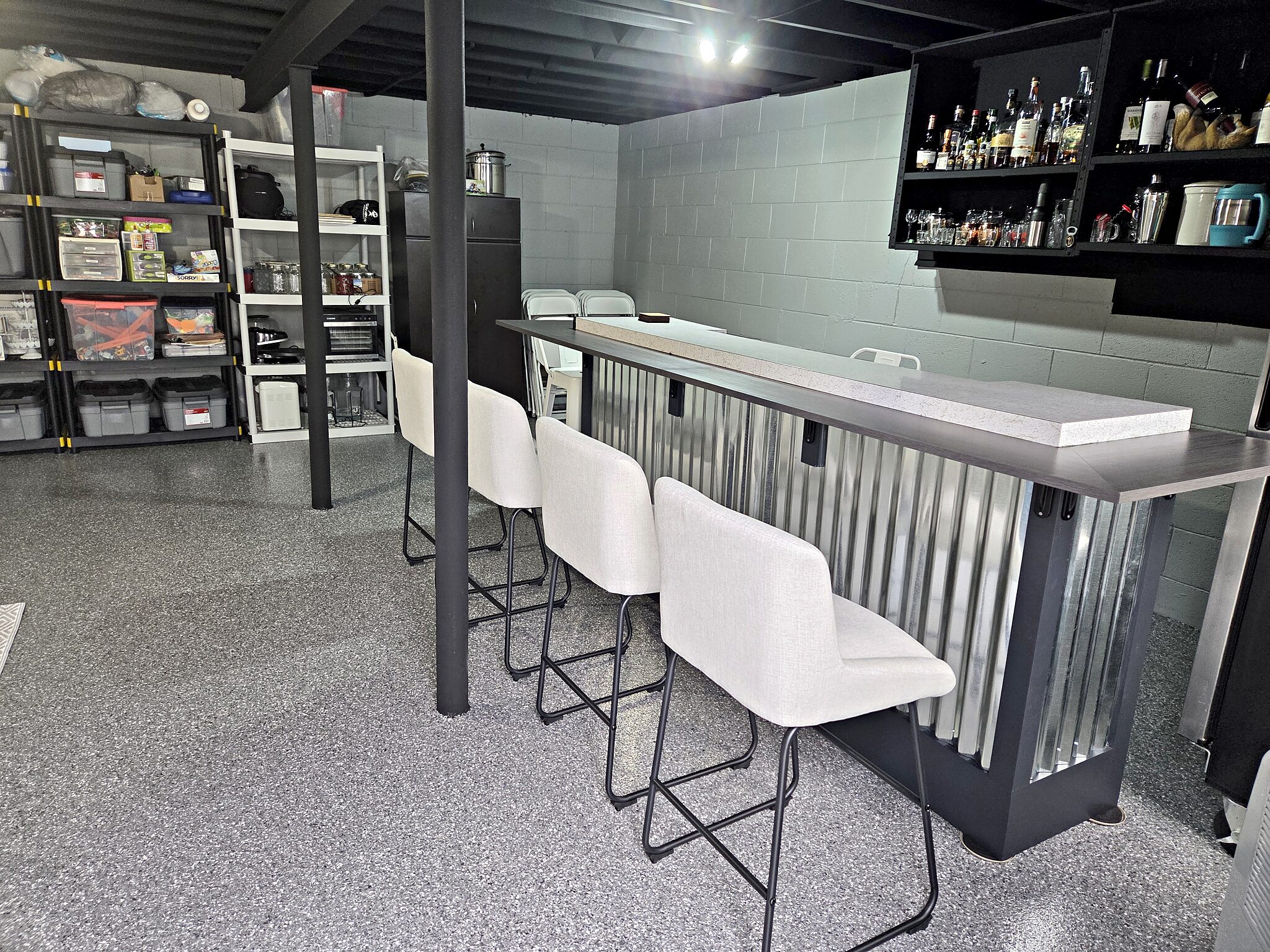
Coatings suit basements used as rec rooms, bars, home gyms, laundry and utility areas, workshops and storage. They are seamless, so spills wipe up instead of soaking into grout lines or carpet, and a flake finish hides dust and small marks well. They also brighten a dark concrete floor without adding much height, which matters at stair landings and doors.
They are a weaker fit where you want a soft, warm surface underfoot, such as a play area or bedroom, or where the slab has active cracks that keep moving. A coating can bridge minor, dormant surface cracks, but it will not hold a crack that opens and closes.
Why does moisture come first in a basement?
Basement slabs sit against the ground, so moisture can move up through concrete that looks completely dry. Each coating system specifies the test method and the limit it can tolerate, and those differ between products. As one example, Sika’s Sikafloor-515 data sheet sets a limit of no more than 4% by mass on a specified concrete moisture meter and states that relative-humidity testing is not a substitute for that reading. Sikafloor-515 product data sheet (PDF).
That figure is one product’s rule, not a universal number. The useful question for any proposal is: which method will be used, what limit does the proposed system require, and what happens if the slab is over it? Our guide to moisture testing before floor coating walks through that conversation in detail.
What is the best coating for a basement floor?
For a dry, sound slab in a room you want to use, a professionally installed epoxy or flake system with a protective topcoat is the most durable basement floor coating. For a low-traffic storage or utility area, a concrete floor paint or sealer is the cheapest way to finish the floor, as long as you accept that a thin film wears sooner and still needs a dry slab.
Can you epoxy a basement floor yourself? Kits exist, but the hard parts are the ones a kit cannot do for you: testing the slab for moisture, mechanically grinding it, and repairing cracks and pits so the coating can bond. For the difference between a rolled-on product and a full system, see floor paint vs. epoxy.
| Option | What it is | Main trade-off |
|---|---|---|
| Concrete floor paint or sealer | A thin coat applied after cleaning, often DIY | Lowest upfront cost, but thin films wear and can peel where moisture or poor preparation is a problem |
| Professional epoxy or flake system | Mechanically prepared slab, repairs, base coat, flake broadcast and a protective topcoat | Durable and easy to clean; needs a suitable slab and more preparation time |
| Floor covering (carpet, vinyl plank, tile) | A separate flooring layer over the concrete | Warmer or softer underfoot, but still needs a moisture plan and can be damaged by water |
What are the downsides of epoxy in a basement?
- Moisture sensitivity. Coating over a slab that is too wet for the system is the main cause of bubbling and delamination.
- Cold, hard surface. Like bare concrete, it feels cool underfoot; area rugs help in living spaces.
- Slippery when wet. Smooth, glossy finishes can be slick with water; a flake broadcast or an anti-slip additive in the topcoat adds traction where needed.
- Preparation and downtime. Grinding is dusty, the room has to be emptied, and you need to stay off the floor until the system’s return-to-use times have passed.
- Not a fix for structural or water problems. Moving cracks, active leaks and drainage issues need their own solution first.
For a garage, the trade-offs are a little different; see epoxy garage floor pros and cons.
Does a floor coating help with radon?
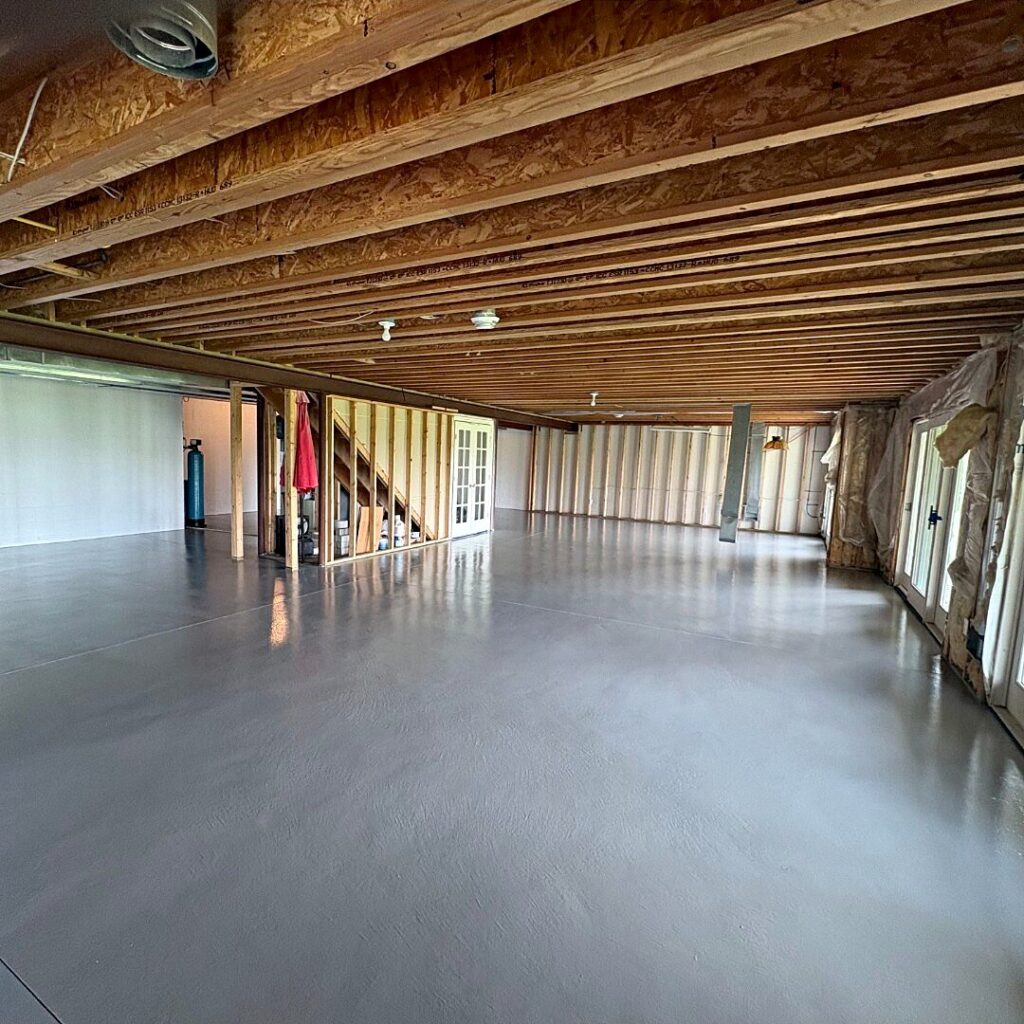
No. Do not rely on a floor coating to reduce radon. Testing is the only way to know a home’s radon level, and a qualified mitigation system is the fix when levels are high. EPA recommends testing and explains mitigation options on its radon information page. If you have radon concerns, have the home tested and any mitigation planned before the floor is coated, and tell your floor contractor about any existing system so it can be worked around.
Can a basement floor be coated in winter?
Often, yes. Heated basements usually stay at more stable temperatures than detached or unheated garages, which helps. The deciding factor is still the slab temperature, the air temperature and humidity compared with the product’s application and cure requirements. Cooler conditions lengthen cure times, so ask for walking and return-to-use dates for your conditions rather than a generic number. See how cure times change with temperature for an example.
How much does a basement floor coating cost?
The same factors that drive garage pricing apply: measured area, removal of any old paint or sealer, crack and pit repair, any moisture-control layer, and the finish system. Basements add access considerations, such as carrying equipment down stairs and working around columns, utilities and stored items. Our guide to floor coating cost factors explains how to compare estimates on the same scope.
How Midwest Painting Pros approaches basement floors
We look at the slab, any existing coating, cracks and staining, and assess moisture where warranted before recommending a system. Preparation is mechanical grinding, with crack and pit repair included in the written scope, followed by the agreed base, flake and topcoat. You get the system, timeline and price in writing, and floor coating work carries our 2-year limited warranty.
What should you share for a basement floor estimate?
- Approximate dimensions and how the space is used now and will be used.
- Wide photos plus close-ups of cracks, stains, old paint or any white powder on the concrete.
- Any history of water, dampness or a sump pump, and whether it has been addressed.
- Whether a radon system is installed or planned.
- When the room can be emptied and kept out of use.
Midwest Painting Pros coats basement, garage and shop floors across Waukesha County and Southeast Wisconsin. Learn more about our epoxy and floor coating service, then request a free written estimate for your floor.