Which drywall repairs usually come with a paint job?
Nail pops, dents, small holes and hairline cracks are normally included in a repaint; larger damage is quoted as its own line item.
| Repair | Usually part of the paint job? | Notes |
|---|---|---|
| Nail pops and screw pops | Yes | Reset or secured, then spackled and spot-primed |
| Dents, dings and small holes (anchors, nails) | Yes | Filled, sanded and primed before paint |
| Hairline cracks at corners and seams | Usually | Recurring cracks can indicate movement and may need more than filler |
| Loose or peeling tape at a seam | Often, if limited | Re-taped and feathered; a long run of failed tape is its own scope |
| Holes larger than a fist, damaged corners | Separate line item | Patch or new section, multiple coats, texture blending |
| Water-damaged, soft or moldy drywall | No | Fix the water source first; affected board may need replacement |
| Skim coating a whole wall, matching heavy texture | Separate line item | Priced by area and finish level |
Why do drywall patches show through paint?
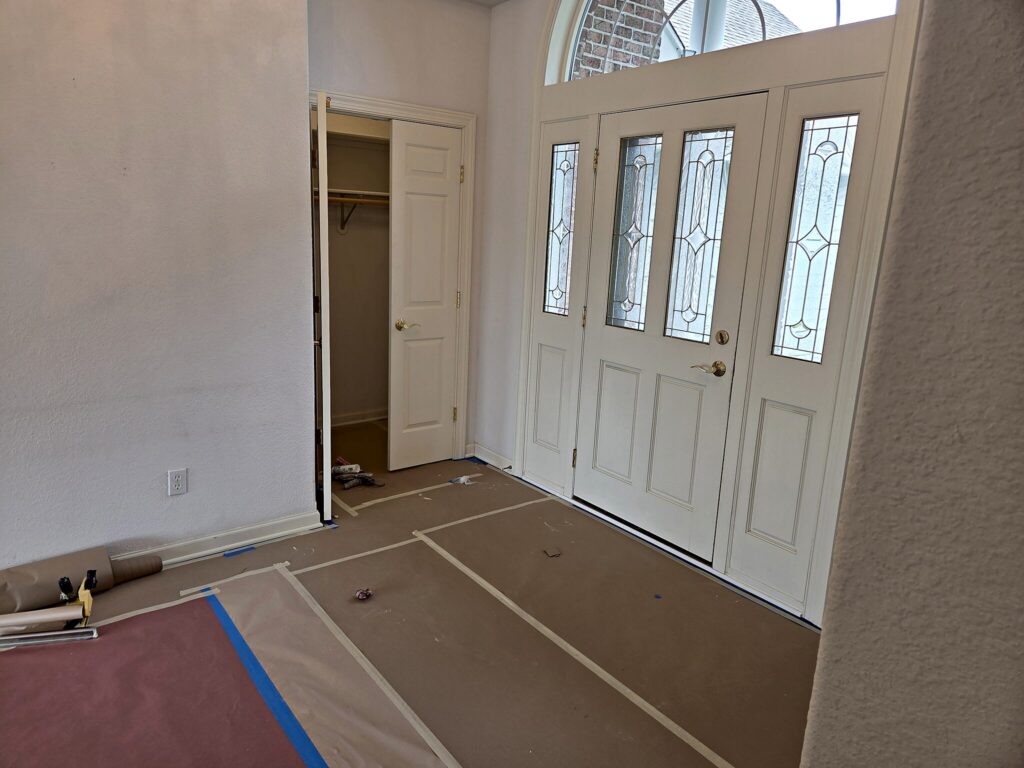
Joint compound and the drywall’s paper face absorb paint differently, so an unprimed patch can dry duller or shinier than the wall around it. USG makes a primer specifically to equalize “surface texture and porosity differences” between face paper and joint compound and to minimize “joint banding and photographing.” USG Sheetrock First Coat Primer. That is why patches are primed before the finish coats, and why sanding and feathering the edges matter.
The sheen and lighting matter too. The industry’s finish-level standard (GA-214) treats Level 4 finishing as suitable for flat paints and light textures but “not recommended” under non-flat or dark, deep-tone paints. Those, and walls with strong side lighting, call for a Level 5 finish with a skim coat over the whole surface, which “minimizes the possibility of joint photographing.” National Gypsum: gypsum board finish levels. If you are choosing an eggshell or satin in a sunny room, ask how patches will be blended. See choosing interior paint sheen.
How much time do repairs add?
A few nail pops and dents add little time; larger patches add drying time. Repairs need to dry, be sanded and be primed before paint, and deeper patches take more than one coat. Even a fast-setting compound is not instantly paint-ready: USG lists about 85–130 minutes for Easy Sand 90 to harden, and separately instructs users to sand and prime once it is dry. A room with a handful of nail pops adds little time; many patches, deep repairs or texture matching add drying and finishing time that the schedule should account for.
When is drywall damage more than a painting repair?
- Water stains, soft spots or mold. The EPA’s guidance is to fix the water problem first, notes that porous materials may have to be thrown away if they become moldy, and says plainly: “Do not paint or caulk moldy surfaces.” EPA: A Brief Guide to Mold, Moisture and Your Home.
- Cracks that keep coming back. A crack that returns after repair can indicate movement in the framing or structure that filler alone will not solve.
- Large holes, damaged corners or sagging ceilings. These need new material and several coats, not just spackle.
- Texture matching across a room. Blending knockdown or orange-peel texture is a skill and a time cost of its own.
What should a painting estimate say about drywall?
It should list which repairs are included, how patches are primed, and how bigger damage will be handled:
- Which repairs are included in the painting price, and what counts as “minor.”
- Whether patches are spot-primed or the walls are fully primed.
- Whether existing texture will be matched, and how.
- How larger damage will be quoted if it is found once furniture is moved.
Clear answers to those questions make two painting estimates comparable. See when interior walls need primer and how to prepare for interior painting.
How Midwest Painting Pros handles drywall repairs
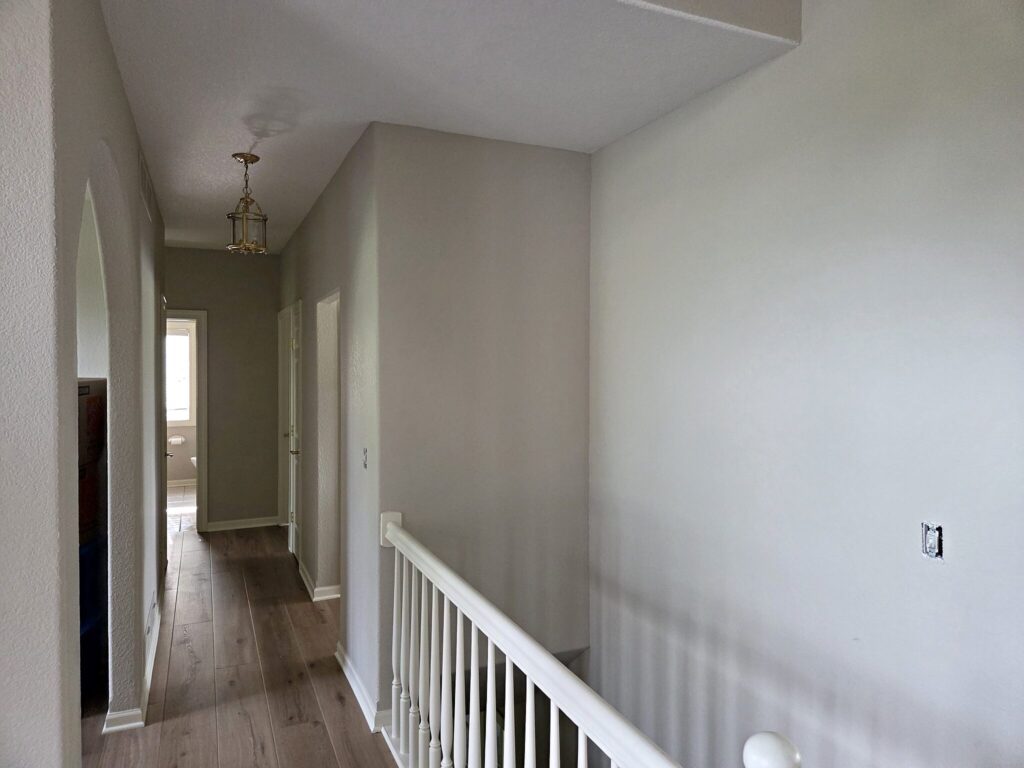
Painting comes first for us, and the repairs that make a paint job look right are part of it: nail pops, dents, small holes and hairline cracks are filled, sanded and primed before the finish coats, and the estimate says so. When we find water damage, larger holes or texture work, we list it separately so you can decide. For bigger repairs on their own, see drywall repair and texturing and interior painting.