
Brick & Masonry Painting
Serving Waukesha County & Southeast Wisconsin
Change the appearance of exterior brick with an assessment that starts below the color. Midwest Painting Pros evaluates existing coatings, porosity, efflorescence, moisture clues, mortar condition, access, and adjacent surfaces before preparing a brick or masonry painting proposal.
Call or Text
262-333-9695A Permanent Design Decision
Should Exterior Brick Be Painted?
Brick can be painted, but the right answer depends on the wall—not just the desired color. Paint creates an opaque film and changes future maintenance. A penetrating masonry stain changes color differently, while limewash is a separate mineral finish with its own appearance and performance. Midwest Painting Pros offers masonry painting, penetrating brick and masonry staining, and exterior brick limewash. We assess the surface and desired appearance before recommending an option; these finishes are not interchangeable. For textured stucco walls rather than exposed brick, see our stucco painting and surface-assessment service.
Before recommending paint, we look for existing coatings, glazed or low-absorption brick, loose or powdery mortar, cracks, efflorescence, water entry, and surfaces that need repair by the appropriate trade. Coating over active moisture or unsound masonry can lead to avoidable failure.
| Finish | Appearance | What to plan for |
|---|---|---|
| Acrylic masonry paint | Opaque color that softens the visible texture. | A maintained coating that requires repainting over time; removal can damage brick. |
| Masonry stain | Changes color while retaining more of the masonry texture. | Absorption, existing treatments and the selected stain determine suitability. Approve a sample first. |
| Limewash | A matte mineral finish with a nonuniform appearance. | Expect weathering and variation rather than a permanently uniform painted look. |
Moisture and Condition Come First
What We Assess Before Painting Brick
Efflorescence, deteriorated mortar, failed existing coatings, and staining near openings can point to conditions that need attention before a finish is selected. We document visible concerns and separate painting preparation from masonry, flashing, structural, or water-entry work that may require another qualified trade.
Illustrations show common masonry conditions evaluated before painting; they are not Midwest Painting Pros project photos.
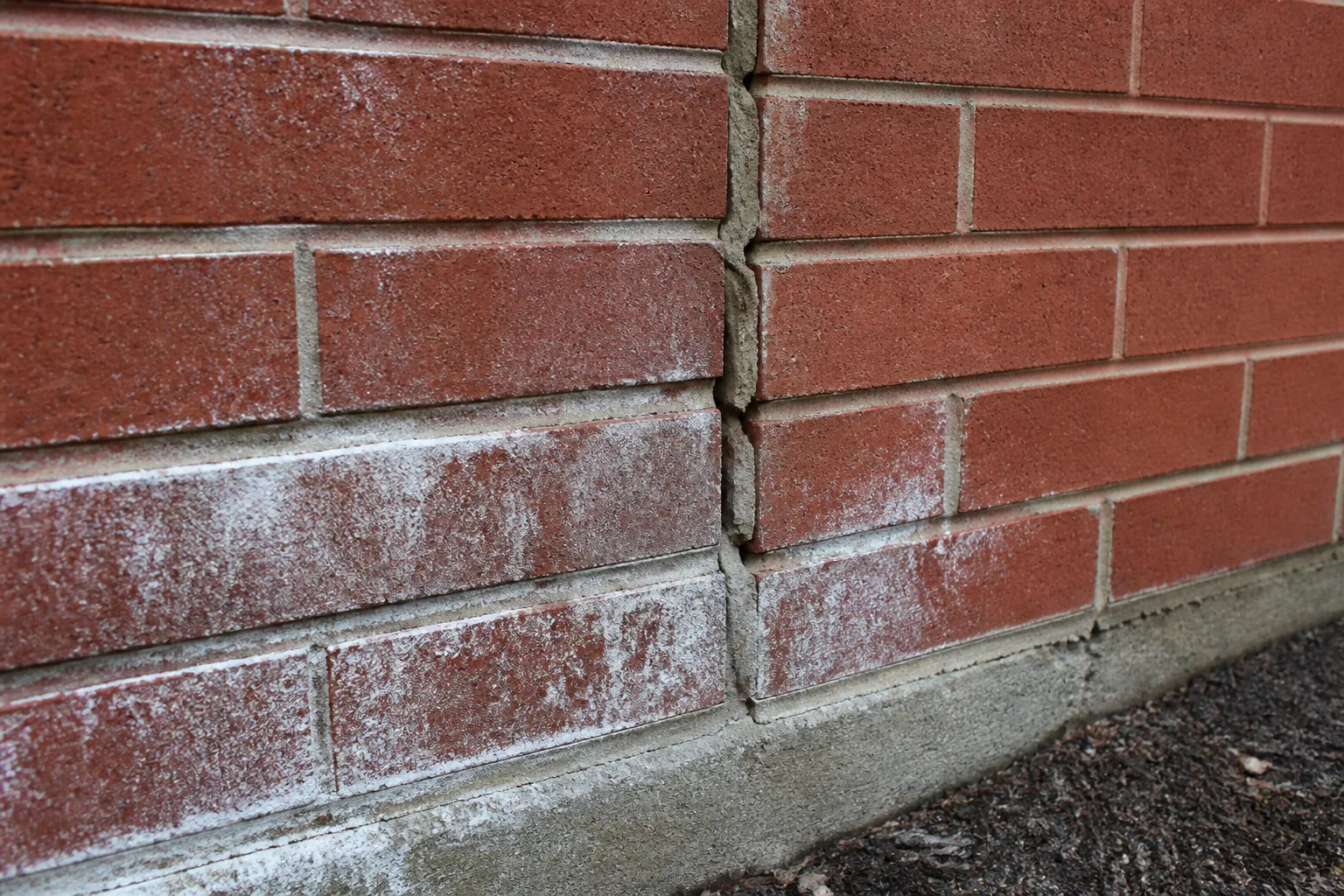
Efflorescence
White powdery deposits are commonly associated with moisture moving soluble salts through masonry. Cleaning the deposit without investigating the source can leave the underlying condition unresolved.
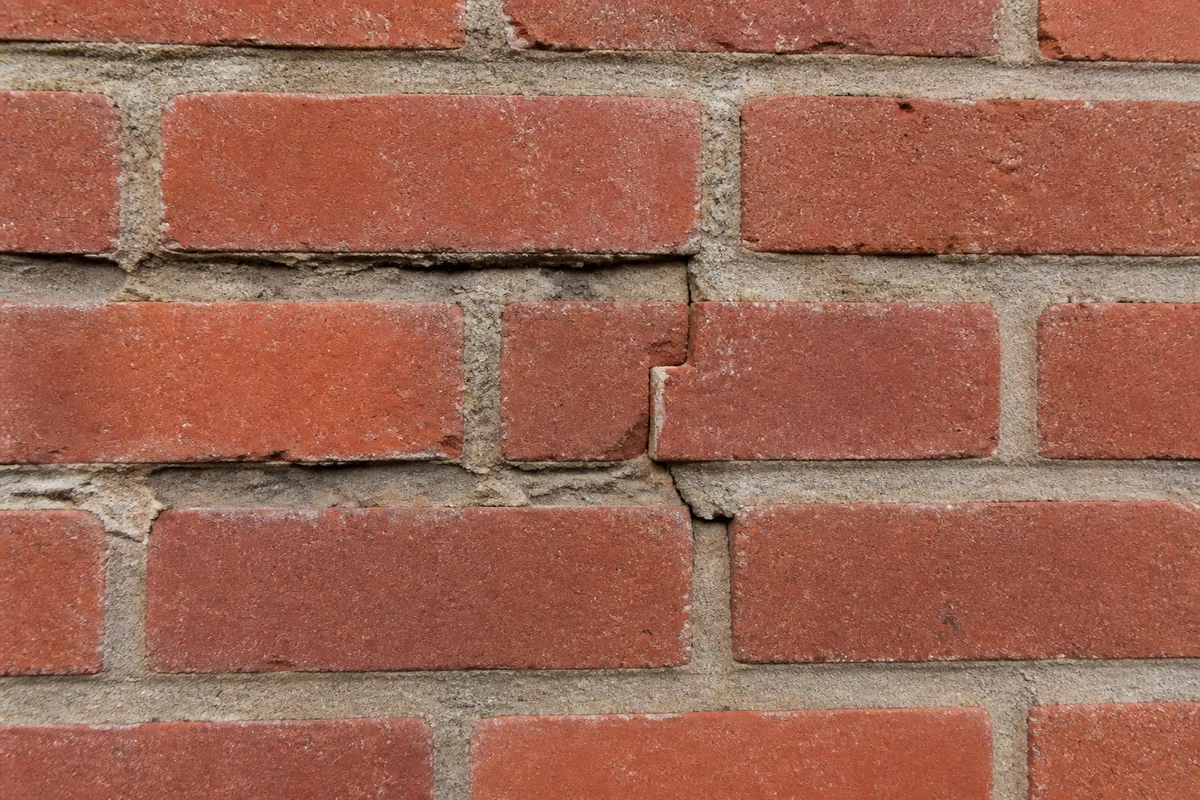
Mortar and Cracks
Loose, recessed, or powdery mortar and recurring cracks are assessed before coating. Midwest Painting Pros refers mortar-joint repairs and tuckpointing to a mason before coating where needed.
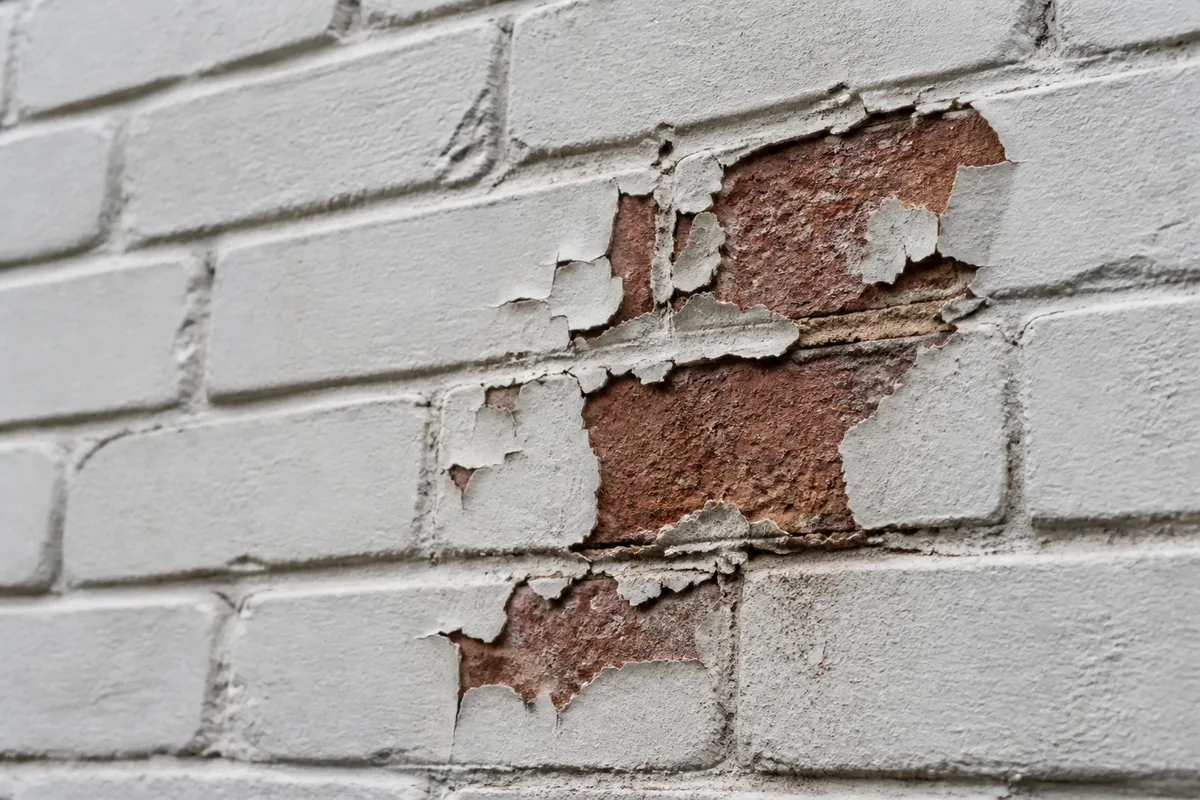
Existing Coating Failure
Peeling, blistering, chalk, and poor adhesion affect cleaning, removal, primer selection, and whether the remaining coating can support a new system.
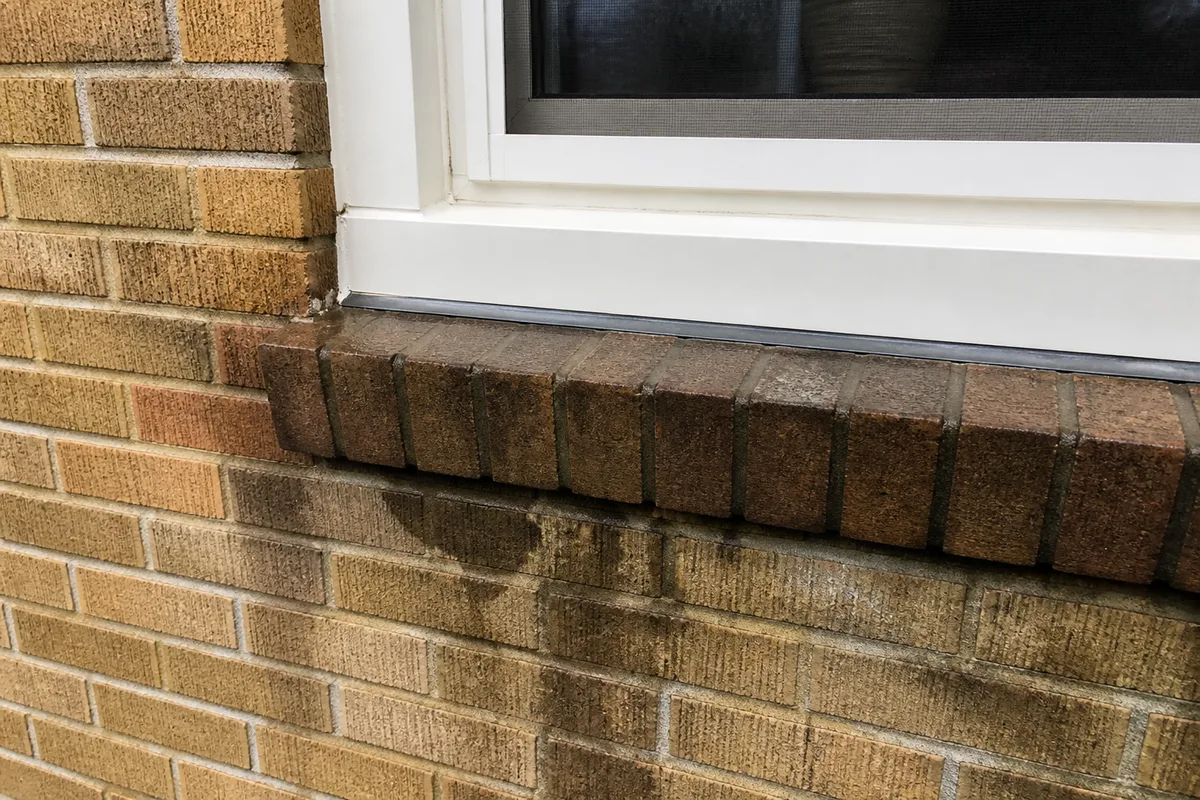
Water-Entry Clues
Staining near windows, flashing, rooflines, grade, splashback, and penetrations can indicate an exposure or drainage concern that paint should not conceal.
Masonry-Specific Preparation
How We Prepare Brick for Painting
Inspect and Test the Surface
We review coating history, absorption, mortar, cracks, staining, moisture clues, and the surrounding materials that need protection.
Resolve Repair and Moisture Concerns
The scope separates paint preparation from masonry, flashing, or structural work that should be completed first.
Clean and Dry Thoroughly
Dirt, loose material, growth, chalk, and deposits are removed with a method appropriate to the brick. Porous masonry needs adequate drying time.
Prime or Condition Where Specified
Absorption, prior coating, repairs, and the selected system determine whether a masonry primer or conditioner belongs in the specification.
Apply the Compatible Topcoat
The coating is worked into the brick profile and mortar joints at the documented spread rate and under suitable weather and drying conditions.
What the Proposal Defines
Brick Painting Is More Than a Color Selection
Substrate
Brick type, absorption, mortar, existing finish, and repaired areas influence preparation and coating choice.
Exposure
Sun, rain, snow, splashback, rooflines, vegetation, and shaded walls create different conditions around the home.
Finish
Color, sheen, coating build, application method, trim, and adjacent siding are documented before work begins.
Our exterior masonry product experience includes Sherwin-Williams Loxon products and Loxon XP coatings, along with DRYLOK and Zinsser products. The primer, conditioner, or finish specified depends on the surface and selected system. Painting products are not interchangeable with penetrating stains or limewash.
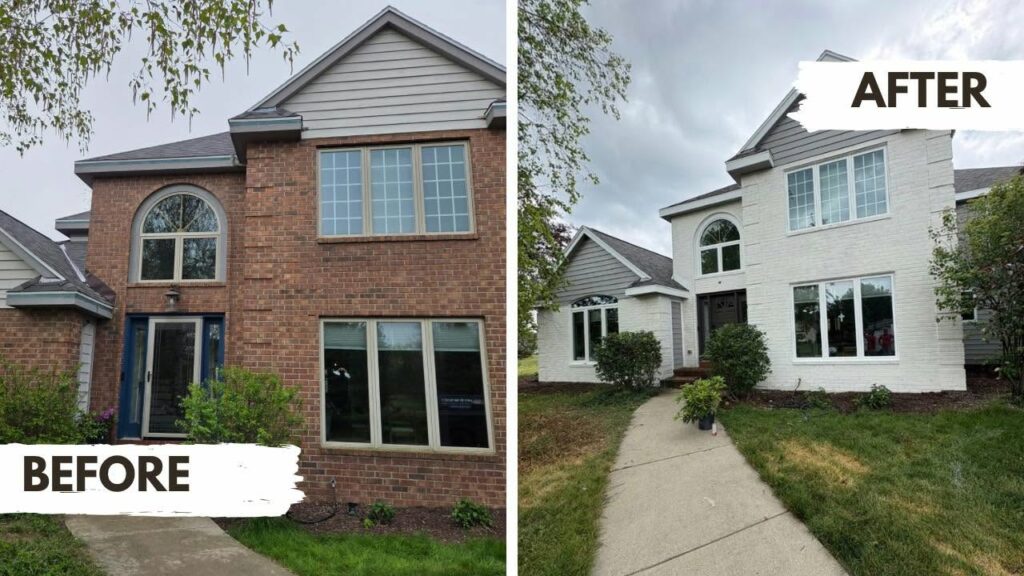
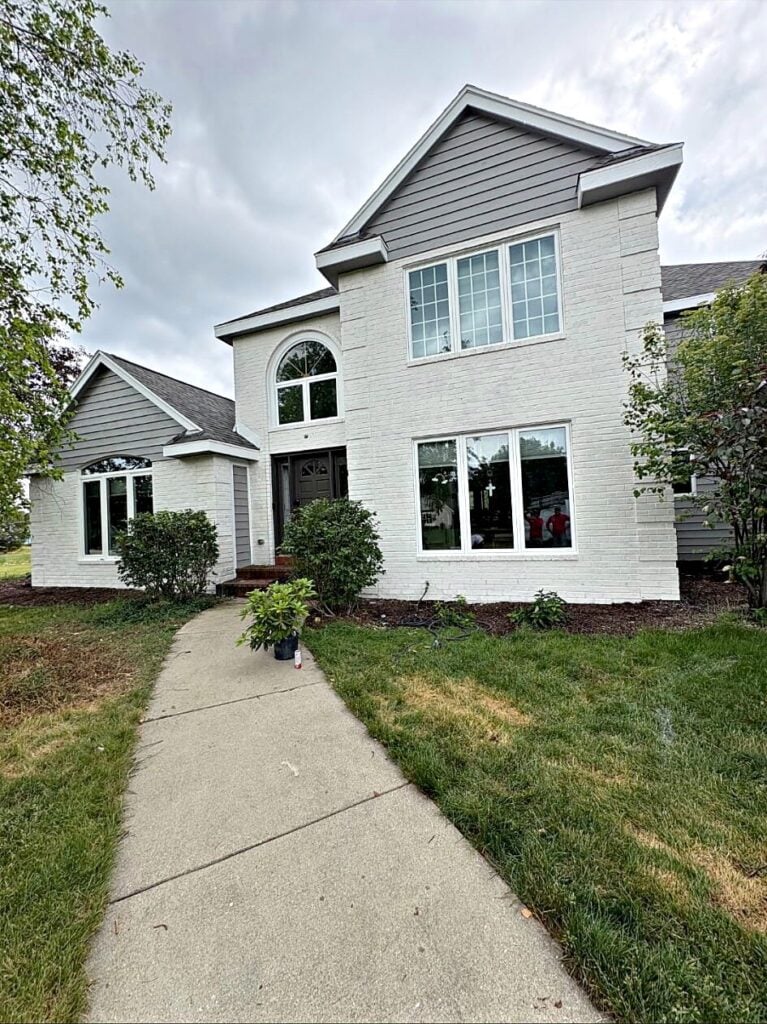
Real Brick Transformation
Exterior Brick Painting Project
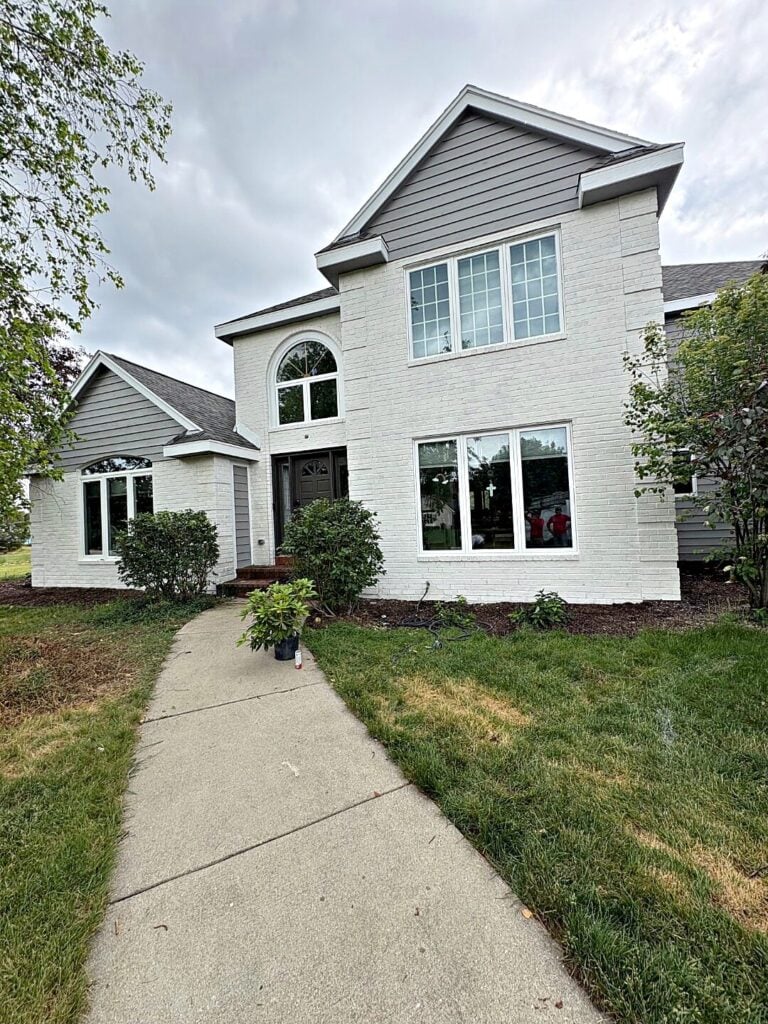
See how Midwest Painting Pros transformed a red-brick exterior with a clean white finish. View more brick and masonry projects in Our Work.
Exterior Painting Reviews
What Our Clients Say
We recently had our house painted while also having our roof replaced and Midwest Painting Pros (Chad specifically) were wonderful to work with! He worked with us every step of the way and helped coordinate the work schedule with the roofers. They even took on a few extra projects that we noticed along the way. Would highly recommend for all your painting needs!

We worked with Midwest Painting Pros to paint our gutters (recent project) and garage doors (previous project), to update the look of our home. Chad provides timely responses, estimates and communication - which we really appreciated. The quality of the work was great, and the ultimate outcome was exactly what we had hoped for! We recommend them to anyone that asks and will certainly go back for any future painting needs.

The amount of detail and time put into painting our house was exceptional from prepping to finish! Couldn’t have hoped for a better crew, Marco and Miguel were amazing!! (Hopefully I got the names right because they truly deserve the recognition) even neighbors noticed how much attention to detail they had. Thank you for giving our house a new look, loving it!!! Next project at some point will be interior and wouldn’t hesitate using Midwest for that project.

5 stars isn't enough for Chad and his crew. They did an absolutely amazing job painting our house. It was not just paint, it was full service. We had several shudders, collumns, and pieces of wood siding that needed repairs and they took care of all of it. The crew (shoutout Marco) was incredibly professional and made sure we were involved every step of the way. To make things even better, their prices are incredibly competitive and I am happy to say we consider ourselves lifetime customers. It is nearly impossible to find a company in this buisness that is as reasonable, responsive, professional, and competent as these guys.

Brick Painting Cost Factors
- Painted area, height, access, and masking
- Brick profile, porosity, and existing coatings
- Efflorescence, biological growth, and cleaning needs
- Mortar, crack, or moisture issues requiring separate repair
- Primer/conditioner, color change, and finish specification
A Written Scope and Two-Year Workmanship Warranty
Midwest Painting Pros provides a two-year workmanship warranty on completed work. Your proposal identifies the included preparation, coating, and applicable warranty details.
See our broader exterior painting services or request an on-site masonry assessment.
Get a Free EstimateBrick & Masonry
Existing coatings, porosity, mortar, efflorescence, cracks, and moisture sources should be evaluated before the coating is selected.
Paint is generally opaque and film-forming; masonry stain is intended to color absorptive masonry differently; limewash is a mineral finish with a distinct appearance and application. Suitability depends on the brick and desired result.
The deposit and its moisture source should be addressed before painting rather than simply hidden.
Absorption, glaze, repairs, existing coatings, and manufacturer instructions determine the specification.
Paint can penetrate pores and mortar joints, so homeowners should treat exterior brick painting as a consequential, maintained finish decision.
The estimate distinguishes painting preparation from masonry or structural work that requires another scope or trade.
Masking windows and adjacent materials, working paint into textured joints, and major color changes also matter.
The written proposal documents the included scope and applicable warranty details.