Can you paint a house in September or October?
Yes, when the preparation, primer, and finish can all meet their application and drying requirements. A trim repaint and a full siding project need different amounts of working time. Ask for a scope that identifies repairs, preparation, materials, and coats; see our exterior painting services for the work we can evaluate.
What does Southeast Wisconsin’s fall weather data show?
NOAA’s 1991–2020 climate normals for Milwaukee Mitchell Airport show how quickly conditions change. These are 30-year averages at one regional station, not a forecast for your property or a count of suitable painting days.
| Month | High | Low | Freezing lows* |
|---|---|---|---|
| September | 73.5°F | 56.4°F | 0.0 |
| October | 61.3°F | 44.7°F | 1.9 |
| November | 47.8°F | 33.1°F | 14.5 |
The planning implication: November’s average low is below a 35°F coating threshold. October has more temperature room on average, but neither month guarantees a compliant application-and-drying window. Use the property’s forecast and actual surface readings, not the airport’s monthly average, to decide.
Is 50°F the minimum temperature for exterior painting?
Not for every coating. Some exterior acrylics are rated for lower temperatures, but the application instructions include conditions beyond the minimum on the label. These two published product sheets illustrate the difference; they are examples, not a promise that either product will be specified for your house.
Sherwin-Williams · K62-650
Latitude Exterior Acrylic Satin
Above 35°FCheck the following 48 hours
- What to measure
- Air, surface, and material temperature. Do not apply if air or surface could drop below 35°F within 48 hours.
- Dew-point margin
- At least 5°F above dew point.
- Metal-siding exception
- Large expanses require air, surface, and material at 50°F or higher.
Summarized from the September 2022 product sheet (PDF).
Hallman Lindsay · 172
WEATHERGUARD Satin
Above 35°FMaintain for 48 hours
- What to measure
- Surface and paint temperature; both must remain above 35°F for 48 hours.
- Dew-point margin
- Dew point must not be within 5°F of the temperature until the film dries.
- Metal-siding exception
- Large spans require air, surface, and material at 50°F or higher.
Summarized from the May 2021 product sheet (PDF).
Product sources reviewed September 24, 2026. Confirm the current label and data sheet for the exact product, base, and sheen before use.
The primer, caulk, filler, and stain can have different limits. A low-temperature finish does not override the requirements of the rest of the system.
How much longer does paint take to dry in cold weather?
The same paint can need a very different schedule in colder weather. This comparison uses Latitude K62-650 at 50% relative humidity.
Touch-dry is not recoat-ready: the sheet lists two hours to touch in both temperature columns. That does not mean another coat can go on after two hours.
WEATHERGUARD 172 lists a four-hour recoat time at 75°F and 50% relative humidity, with longer drying expected in cooler or more humid conditions. That four-hour figure is not a cold-weather scheduling promise. See WEATHERGUARD’s test conditions.
Why does the siding temperature matter?
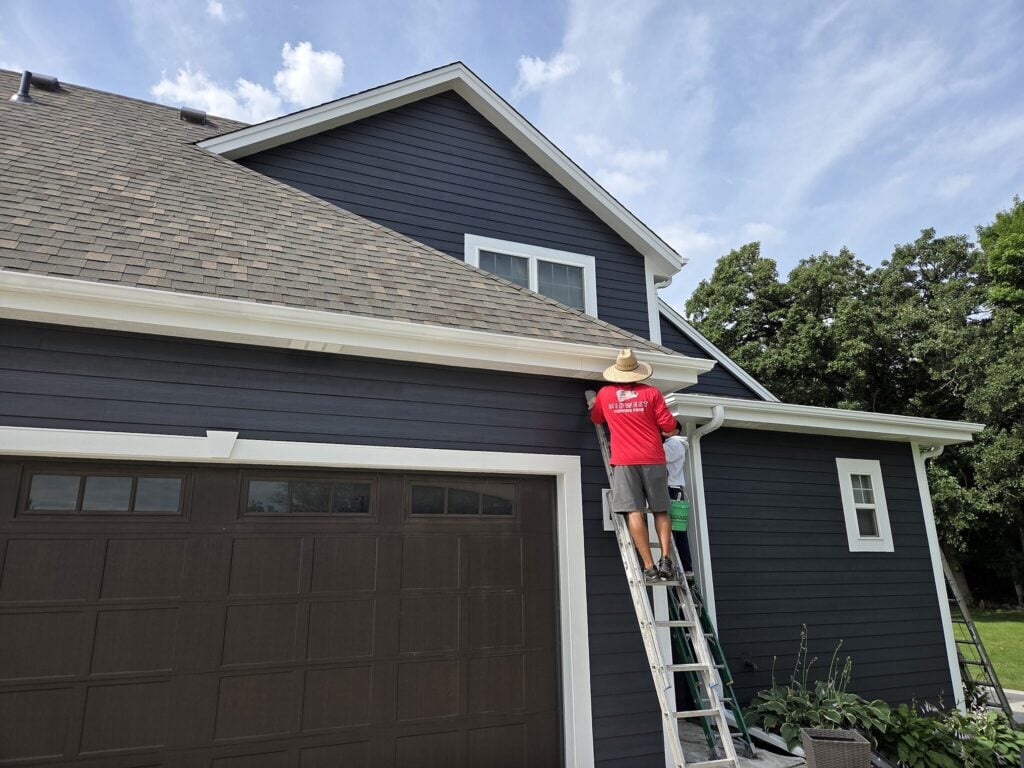
Air and surface temperatures can differ. Benjamin Moore recommends measuring the surface and checking the selected product’s technical data sheet. A warm forecast does not establish that the wall is dry enough to coat. Read Benjamin Moore’s temperature guidance.
A simple dew-point example
Suppose the siding measures 45°F and the dew point is 42°F. The margin is only 3°F—insufficient for the cited five-degree separation, even though the surface is warmer than 35°F. Benjamin Moore recommends a surface more than 5°F above dew point. Read its condensation guidance.
What should you check before scheduling fall painting?
Use these questions during the estimate conversation—not as a substitute for the selected product’s instructions.
| Check | Ask your painter |
|---|---|
| Air temperature | What range does the coating require? |
| Surface temperature | How will the actual siding or trim be checked? |
| Moisture and dew | How will surface readiness be established? |
| Overnight low | Does the forecast meet requirements after application? |
| Rain | What weather window is needed? |
| Drying and recoating | Is there enough time before the next coat? |
| Entire system | Do the primer, finish, and repair materials have compatible requirements? |
What about rain, frost, and cold nights?
A 55°F afternoon followed by a forecast low of 30°F would fail the cited Latitude 48-hour temperature requirement. A warmer daytime high does not cancel that overnight limit. This is an illustration of how to read a product sheet, not a forecast or approval for another coating.
Early rain resistance, recoating, and full curing are different milestones. A short rain-resistance claim does not establish recoat readiness. After rain, let the surface dry and recheck the product’s requirements. Benjamin Moore’s guidance explains why surface conditions matter.
Does the type of siding change the estimate?
Tell us which surfaces need attention and whether you want to keep the current finish or change it. These service pages explain the questions to discuss:
- Wood siding and cedar: paint or stain, the existing finish, and repair needs.
- LP SmartSide: the installed siding and proposed coating scope.
- Vinyl and aluminum siding: finish selection and preparation.
- Trim, fascia, and soffits: the specific details and any carpentry to include.
- Brick and stucco: the existing surface and coating system.
Paint this fall or plan for spring?
If you’re hoping to paint this fall, request an estimate early. As temperatures drop, suitable painting windows become shorter, and available appointments can fill up. Rain, cold nights, or preparation that takes longer than expected can delay a project—and may move exterior painting into spring.
An estimate helps establish whether your project’s scope and the remaining weather window make fall a realistic option. Necessary preparation and the coating’s application requirements should determine the schedule.
Even if spring is the better fit, you can start planning now: clarify repairs, compare the proposed work, and narrow your color choices. Request an exterior painting estimate.
Planning exterior painting in Waukesha County
Midwest Painting Pros serves Waukesha County and surrounding areas in Milwaukee, Jefferson, Walworth, and Racine counties. Share your property address, the surfaces you want painted, and photos of any areas that concern you.
We can review the project and discuss the next step without promising a fall completion date before the scope and conditions are assessed.