What is garage floor paint, exactly?
Most products sold as garage floor paint are one-part, water-based acrylics, often labeled “1-part epoxy” because a small amount of epoxy is blended into the acrylic. Benjamin Moore’s Insl-X GarageGuard is a typical example: an epoxy-modified acrylic, applied in two coats at 1.4–1.8 mils dry per coat, with vehicles allowed back after 3–5 days at 77°F. GarageGuard technical data sheet (PDF).
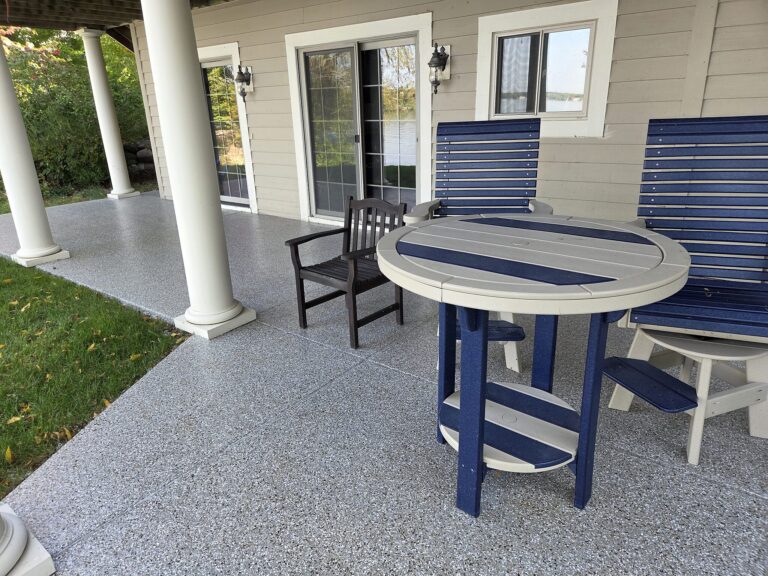
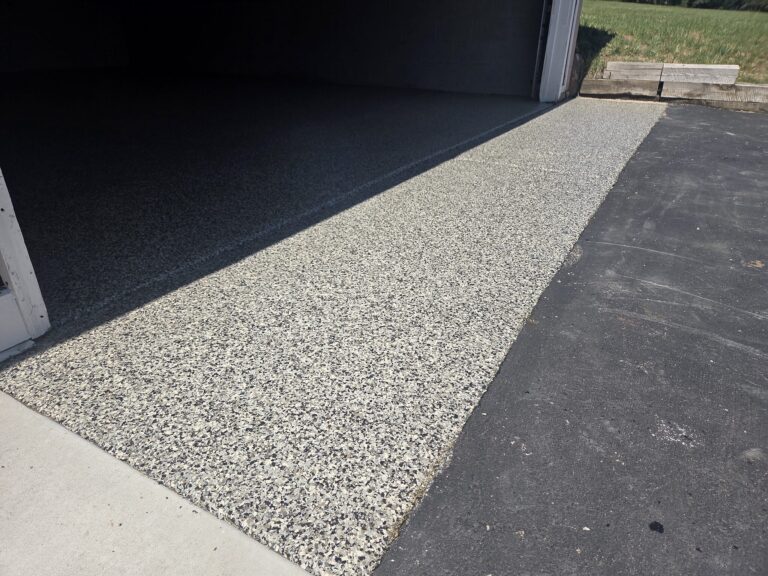
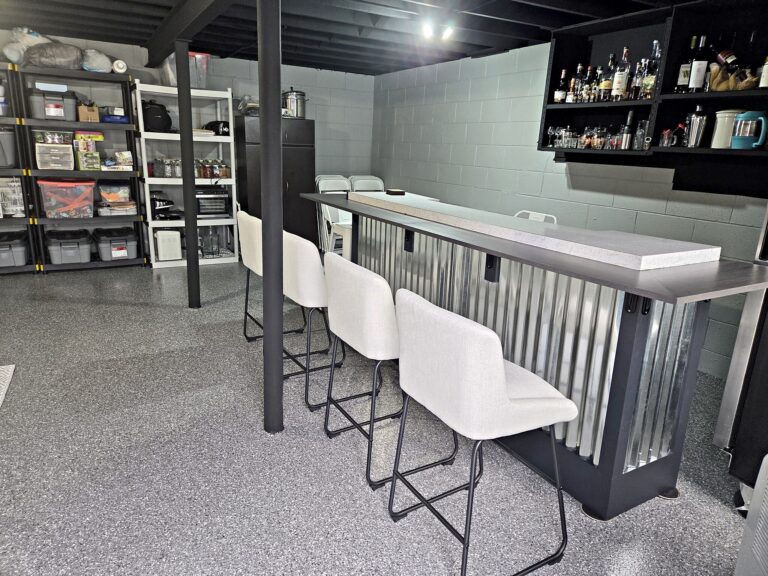
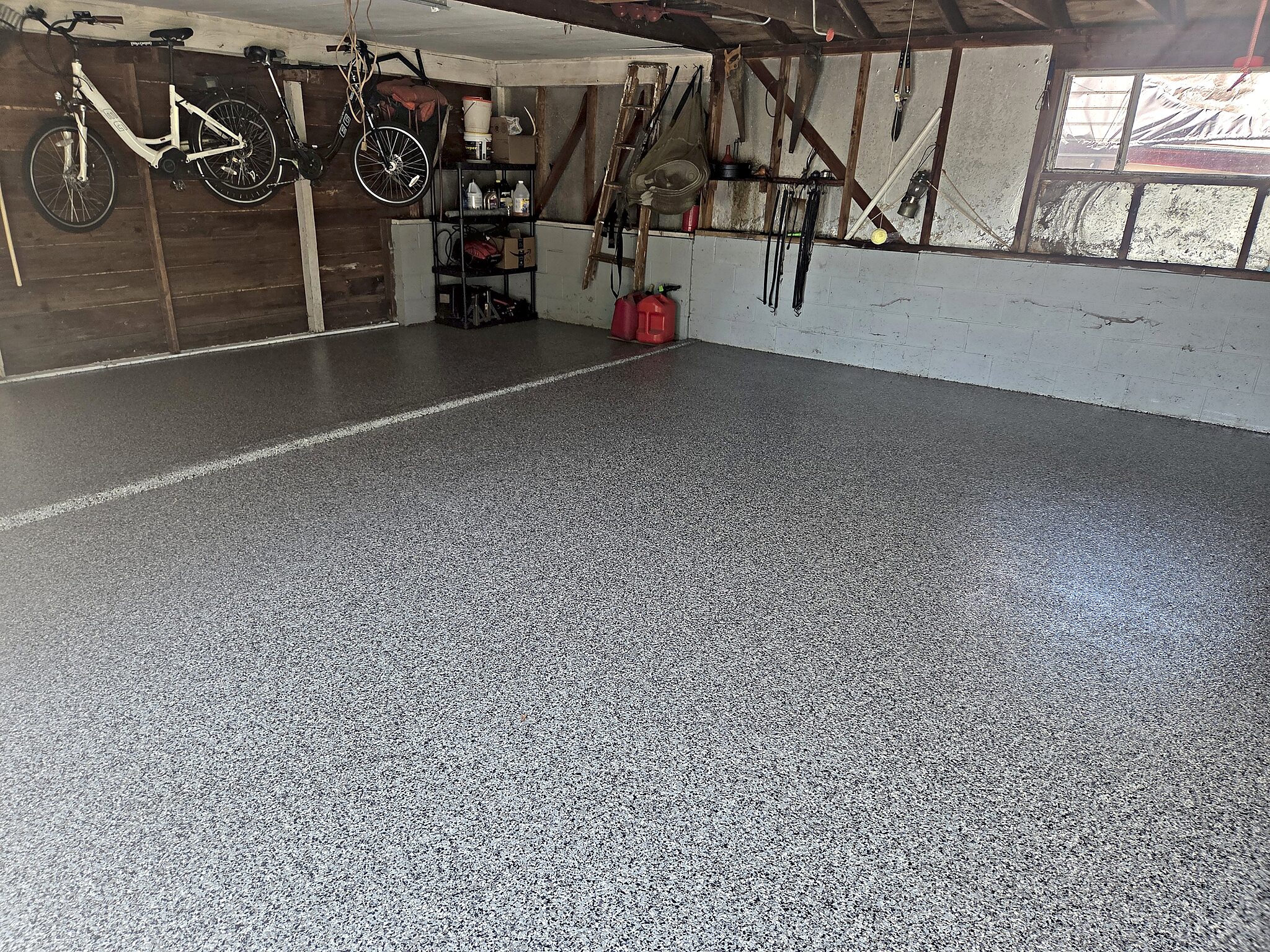
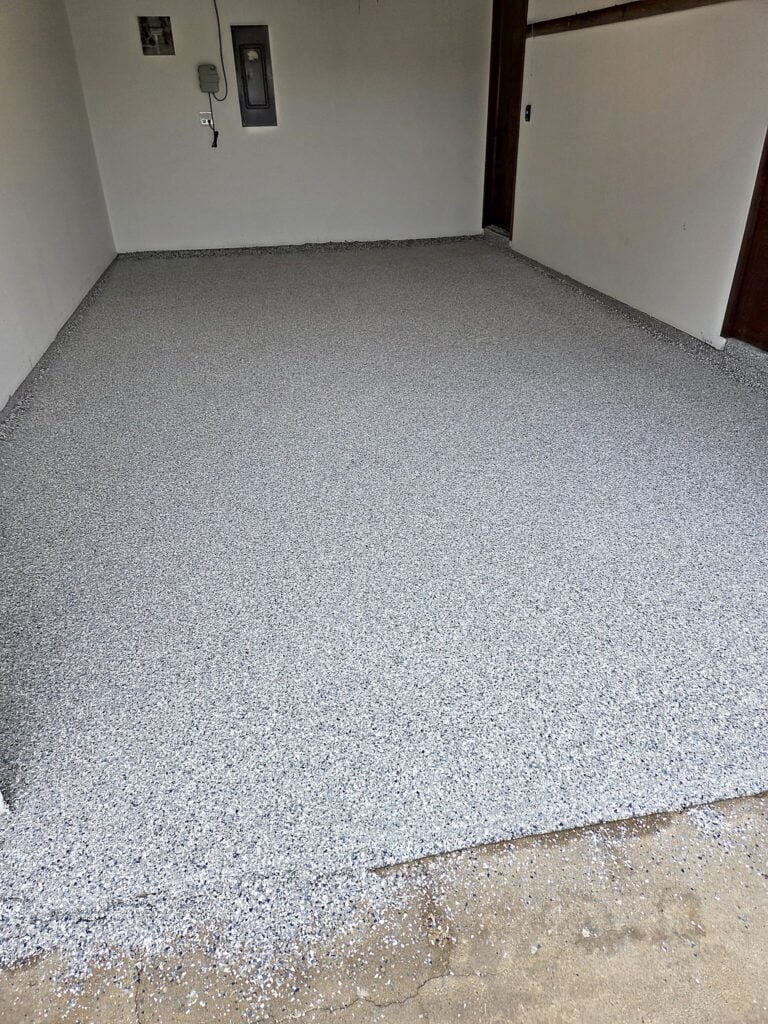
A two-part epoxy or polyaspartic is different chemistry. The resin and hardener are mixed on site and cure chemically into a hard, cross-linked film, so they have short working times and are usually installed by trained crews. In a professional flake floor, those resins are built up in several coats with a full broadcast of colored flakes between them.
| One-part garage floor paint | Two-part flake coating system | |
|---|---|---|
| Example product | GarageGuard epoxy-modified acrylic | Sikafloor-515 polyaspartic over a flake broadcast |
| Film per coat | 3.6–4.6 mils wet, 1.4–1.8 mils dry | 8–10 mil primer, then 10–15 mil coats (wet) |
| Coats | Two | Primer, two broadcast coats and a finish coat in a double-broadcast system |
| Concrete preparation | Roughen bare concrete; grinding recommended, acid etching if grinding is not possible | Shot blasting or equivalent mechanical preparation to ICRI CSP 3–4 |
| Back in use (at the stated temperature) | Light foot traffic 8 hours, vehicles 3–5 days (77°F) | Foot traffic about 4 hours, light traffic about 8 hours, full cure about 5 days (68°F) |
| Traction | Not designed as a slip-resistant finish; add anti-slip aggregate where needed | Smooth clear finish measured 0.25 wet vs 0.99 dry, so texture is built in for garages |
Can you paint a garage floor with regular paint?
No. Regular wall or trim paint is not made for tire traffic, oil, salt or the abrasion of a garage floor. If you paint, use a floor paint labeled for concrete garage floors, which manufacturers formulate to resist hot tire pick-up and automotive fluids, and prepare the concrete the way the label requires. GarageGuard TDS.
Why does garage floor paint peel?
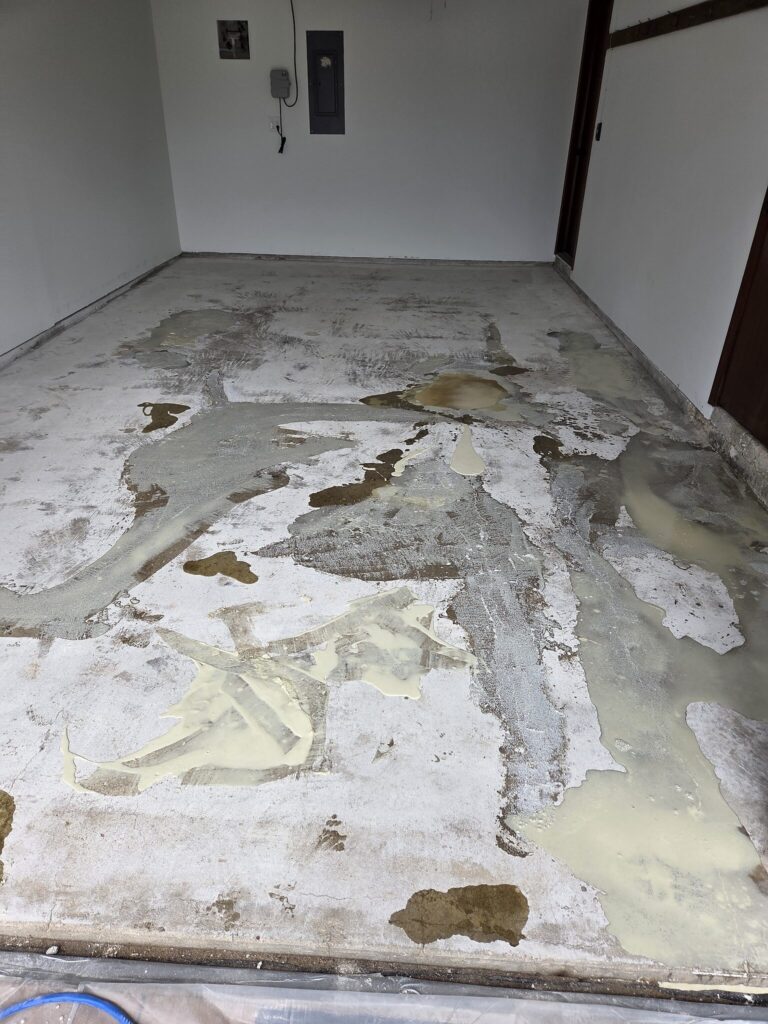
Peeling almost always traces back to the bond between the coating and the concrete, not the color or brand.
- Smooth or dirty concrete. Even the paint manufacturer says bare concrete must be roughened to about the feel of 120-grit sandpaper, with grinding recommended. Paint rolled onto a smooth, sealed or oily slab has little to hold on to.
- Moisture in the slab. GarageGuard calls for a moisture reading of 2% or less, or a 24–48 hour plastic-sheet test with no darkening or condensation underneath. Moisture pushing up through the slab lifts thin films. See checking concrete moisture before coating.
- Concrete that is too new. The same data sheet asks for at least 30 days of cure on new concrete.
- Hot tires on a thin film. Tires that come in hot can soften and lift a thin coating, which is why floor paints advertise hot-tire resistance and why vehicle-rated topcoats exist.
Can you put epoxy over a painted garage floor?
Not without removing the paint first. A coating is only as strong as what it sticks to, and an old paint layer becomes the weak link. Professional systems call for a clean, sound, open-textured concrete surface: Sika specifies removing contaminants and preparing the slab mechanically to ICRI CSP 3–4 before its primer. Sikafloor-515 PDS. In practice that means grinding the old paint off and opening up the concrete, then priming and building the new system.
When is garage floor paint the reasonable choice?
Paint makes sense when the budget is tight, the floor sees light use, and you are willing to prepare it properly and touch it up. A storage garage, a workshop corner or a rental refresh can look much better with a well-applied floor paint. Expect to recoat high-traffic areas sooner than a professional system would need attention.
A two-part system is the better fit when cars park on the floor daily, salt and slush come in all winter, or you want a floor that hides dirt and wipes clean for years. Our epoxy service page notes a DIY kit may cost only a few hundred dollars; the difference in a professional floor is moisture testing, mechanical grinding, crack and pit repair, a full broadcast layer and a vehicle-rated topcoat. For the trade-offs of a coated floor, see epoxy garage floor pros and cons.
How much does a coated garage floor cost?
For a two-car garage of about 400–576 square feet, our planning range for a coating system is $2,600–$5,800. Removing old paint or a failed coating adds preparation time, and the condition of the concrete, moisture and the system selected all move the price. See garage floor coating cost factors.
How Midwest Painting Pros handles painted or peeling garage floors
We check what is on the floor now and whether it is still bonded, test the slab for moisture, and grind away old paint or failed coating before priming. The written estimate names each layer of the new system, the preparation and the return-to-use times, so you can compare it with a paint job on equal terms. Read more about epoxy and garage floor coatings or how epoxy and polyaspartic compare.
What should you share for an estimate?
- Garage size (one, two or three car) and whether the apron or entry step is included.
- What is on the floor now: bare concrete, paint, an old epoxy, or a sealer, and whether it is peeling.
- Cracks, pitting, oil stains or damp areas.
- A few photos of the whole floor and close-ups of the worst spots.