Is 5–12 years a useful repainting schedule?
Yes, for budgeting; no, as an automatic repaint deadline. The manufacturer’s range is general guidance, not a local field study. A single calendar interval cannot account for the condition of each wall, trim detail and previous coating. If you know when the house was last painted, keep that date with the product names, colors, invoice, and repair notes. Those records help the next estimator understand what is already on the building.
If you do not know the date, an assessment is more useful than guessing from the color. A recent paint job with recurring problems deserves investigation; an older finish that remains intact does not need a full repaint simply because it has reached a calendar milestone.
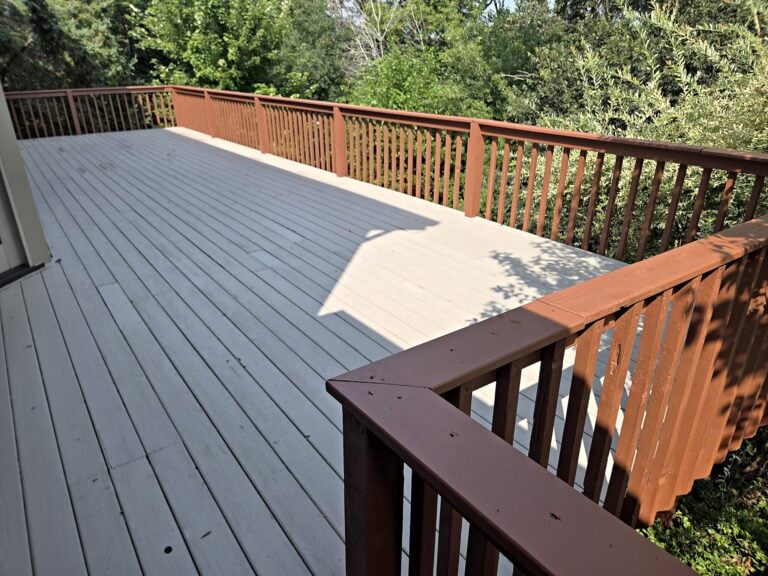
The broad range also should not be applied interchangeably to transparent stains, factory finishes, decks, and painted siding. They are different surfaces and maintenance decisions. Ask which guidance applies to your installed material and current finish. For deck floors, see deck stain vs. paint.
Which signs mean it is time to act?
Use this checklist to organize what you see before requesting an estimate. It separates appearance concerns from problems that deserve closer investigation.
| Observation | What to do next | Does it automatically mean a full repaint? |
|---|---|---|
| Color looks tired, but the finish is intact | Decide whether the concern is appearance or a maintenance need. | No. A color change can be a preference rather than an urgent repair. |
| Dirt or surface staining | Identify the cause and appropriate cleaning method for the material. | No. Cleaning and assessment may be the first steps. |
| A small area of cracking or peeling | Have the failure and nearby material evaluated before choosing a touch-up. | No. Local work may be possible if the surrounding finish is suitable. |
| Bare areas or coating failure across several walls | Arrange a preparation and repainting assessment. | A broader scope may be appropriate, but repairs still need checking. |
| Recurring wet areas, loose material, or visible deterioration | Investigate the building or material problem before scheduling coating. | Paint alone is not the answer. |
For a closer explanation of coating failure, read what needs fixing before repainting peeling exterior paint. If damage appears to extend beyond the finish, ask whether the next step is a painting estimate or a repair assessment.
Why can one side of the house need attention first?
Do not judge the whole exterior from the front door. Compare the exposed sides with sheltered areas, and look at lower edges, roof-to-wall transitions, window trim, and places near downspouts. Record differences rather than assuming every wall has aged equally.
LP recommends at least an annual visual inspection for its SmartSide siding and emphasizes keeping gutters maintained and sprinkler water off the siding. That is a good example of why paint maintenance includes the conditions around a wall, not just the coating on it. Follow your own siding manufacturer’s instructions. Read LP’s siding care guidance.
Trim can also call for a different scope from the larger wall surfaces. Ask whether the estimator recommends work on fascia, soffits, and exterior trim separately, and how the repaired or repainted areas will blend with the remaining finish.
Does the siding material change the maintenance plan?
Yes. A useful plan starts with the actual material and finish instead of assigning every Wisconsin house the same number of years.
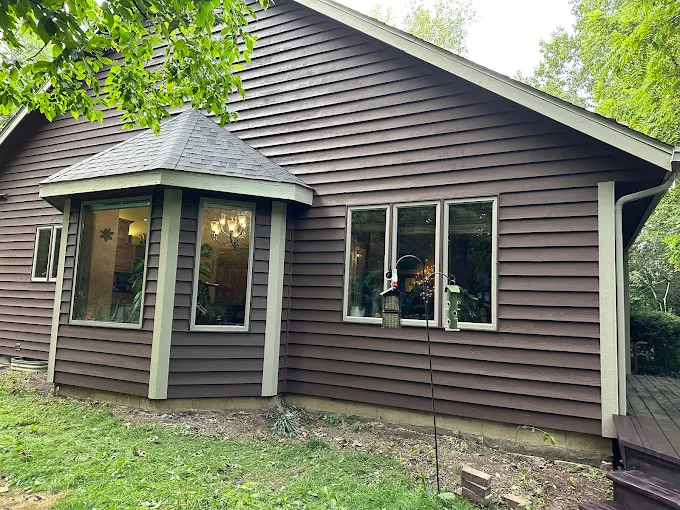
- Painted wood or cedar: identify the existing coating and distinguish finish wear from boards that need repair. See our wood siding painting approach.
- Stained cedar: identify whether the finish is transparent, semi-transparent, or solid before comparing it with a painted exterior. Our cedar siding page covers the service assessment.
- Engineered wood or fiber cement: locate the product’s care instructions and any factory-finish requirements. Do not assume a substrate warranty is a repainting schedule.
- Vinyl or aluminum: confirm panel condition and whether coating is appropriate before treating fading as a requirement to paint.
Ask the contractor to explain the proposed preparation and coating system for your material. A product name alone does not explain what will be done to the existing surface.
What should you check each year?
Choose a time each year to walk around the accessible exterior from the ground. Keep a short photo record so you can compare the same locations over time. This is a planning habit, not a substitute for a professional inspection.
- Photograph each side, then any new peeling, open joints, staining, or visible damage.
- Note where gutters overflow or sprinklers repeatedly wet the siding.
- Compare previous trouble spots with last year’s photographs.
- Follow the material manufacturer’s cleaning instructions; do not assume pressure washing is appropriate for every exterior.
- Request an assessment when a problem spreads, returns, or appears to involve the material beneath the finish.
Do not scrape suspect old coatings or climb to inspect difficult areas yourself. Before disturbing paint on a pre-1978 home, discuss applicable lead-safe practices with the contractor. Review Wisconsin DHS lead-safe renovation guidance.
When should you arrange an estimate?
You can discuss scope and budget before deciding to proceed. Share your maintenance notes and ask which items should be addressed first, whether partial work is reasonable, and what can be planned for a later visit. Ask for those distinctions in writing rather than relying on a blanket recommendation to repaint everything.
For late-season planning, temperature alone is not the whole decision. Our guide to how late you can paint a house in Wisconsin explains the coating and weather considerations. Compare the proposed work using our exterior painting estimate checklist.
Common repainting timeline questions
My paint is more than 12 years old. Must I repaint now?
Not solely because of its age. Have the finish and substrate assessed, especially where you see wear or recurring problems. The planning range is not a deadline that replaces a condition check.
Can I paint only one side of the house?
It may be possible. Ask about the condition of adjacent areas, color matching, sheen differences, and where the work will stop. Partial repainting should have a defined scope and realistic appearance expectations.
Does a paint warranty mean I can skip maintenance?
No. Read the actual written terms and maintenance requirements. Product warranties, contractor workmanship terms, and expected repainting intervals describe different things.
Can Midwest Painting Pros help me plan instead of repainting immediately?
Yes. Tell us what you have noticed and whether you are budgeting or ready to proceed. Our exterior painting service starts with the surfaces, preparation, and agreed repair needs so the estimate describes the work being considered.