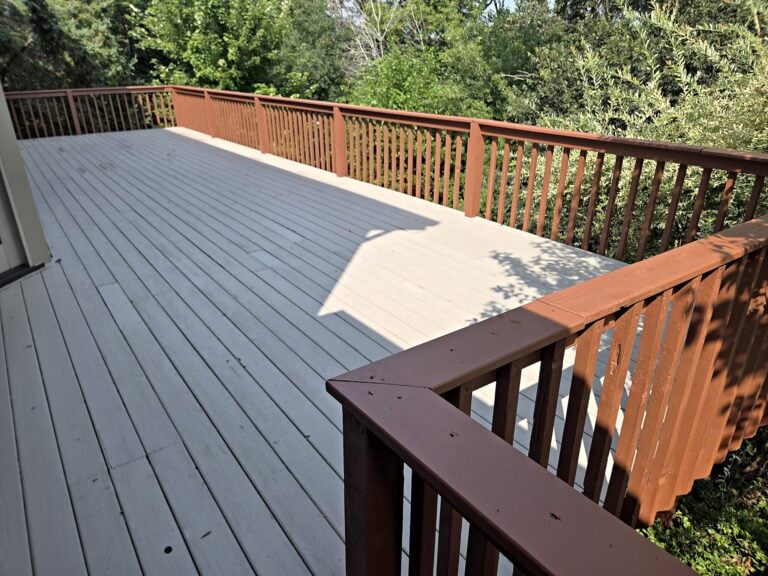
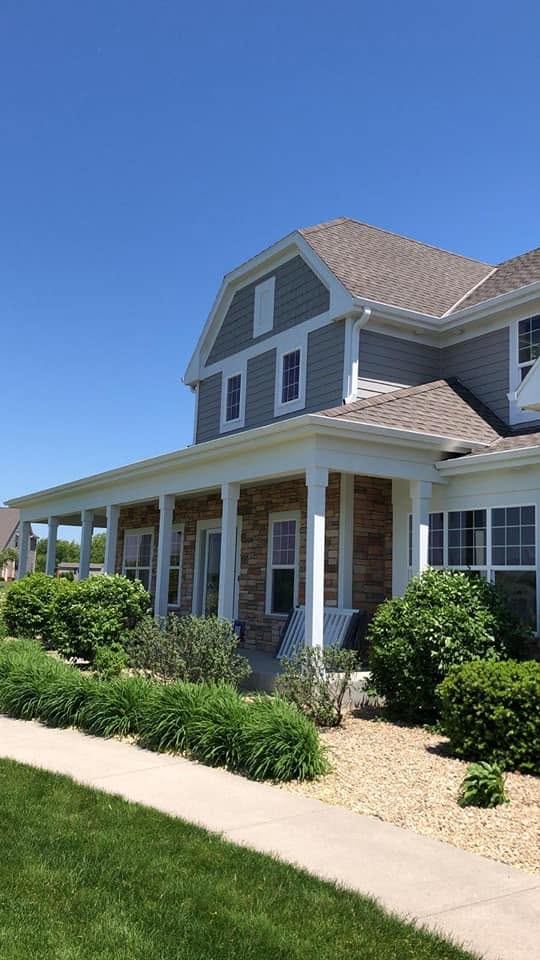
What is already on your cedar siding?
Look for previous invoices, leftover containers, or product records. A photograph may show color and texture, but it does not reliably identify a coating. Tell the estimator whether you know the product, whether different walls were treated at different times, and where the finish has failed.
If you want a natural-looking finish on previously painted cedar, ask whether removing the existing coating is practical and what the exposed wood is likely to look like. A test area can clarify expectations before committing to extensive removal. Replacement boards, old repairs, and uneven weathering may remain visually different under a translucent finish.
For failed coatings, Real Cedar emphasizes assessing condition, addressing contamination, and preparing the existing finish rather than treating pressure washing as a stripping shortcut. Read Real Cedar’s restoration guidance. Our peeling-paint guide covers the broader questions about failure and repairs.
How do paint and the different stains compare?
Real Cedar distinguishes opaque paints and solid stains from more transparent finishes. Solid stain is not the same as a penetrating, non-film-forming finish merely because it is called stain. Its finish-selection guidance also discusses cedar extractives and appropriate stain-blocking primers for opaque systems. Product-specific instructions should guide the actual specification. See Real Cedar’s finish choices.
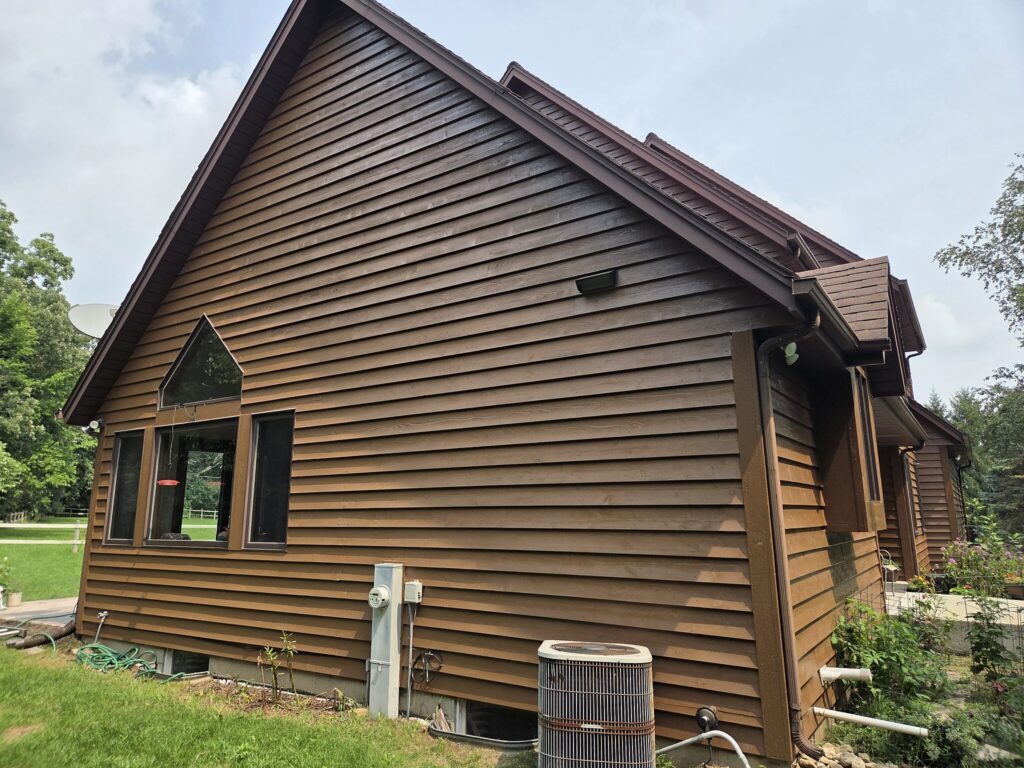
| Direction | Appearance goal | Question before choosing |
|---|---|---|
| Paint | Opaque color rather than visible natural wood color. | What preparation and primer will the existing surface require? |
| Solid-color stain | Opaque color while retaining the visual texture of the siding. | Is this system compatible with the finish already present? |
| Semi-transparent stain | More visible wood character and variation. | Can the siding be prepared to accept the product and achieve the sample appearance? |
Midwest Painting Pros uses Benjamin Moore Woodluxe and Arborcoat exterior wood stains. The existing finish, desired opacity, and condition of the cedar determine the proposed product and preparation.
What does a penetrating stain actually require?
Manufacturer example · Benjamin Moore 592
Woodluxe Oil-Based Semi-Transparent
- Wood moisture
- No more than 15% for proper penetration.
- Application temperature
- Air and surface between 40°F and 90°F; avoid direct sunlight.
- Existing finish
- Remove coatings that prevent penetration before applying this product.
- Coat count
- One uniform coat. Extra-heavy or repeated coats can obscure wood and cause premature failure.
Source: Woodluxe 592 technical sheet, July 9, 2025 (PDF). This is one oil-based formula, not a specification for every Woodluxe or Arborcoat stain.
The practical implication: a sound painted wall is not ready for this penetrating product just because it has been washed. If revealing grain would require extensive stripping, compare that work with retaining an opaque finish before choosing a color.
Use those choices to describe your preference, not to prescribe the product yourself. “I want the wood grain visible” is more useful than “use stain” when the latter might mean several very different finishes.
When might an opaque finish be the practical choice?
Consider an opaque direction when you want a definite color change, prefer a more uniform appearance, or already have an opaque finish that can be properly prepared. Ask to see what the proposed system looks like on siding with a similar profile—not only on a smooth sample chip.
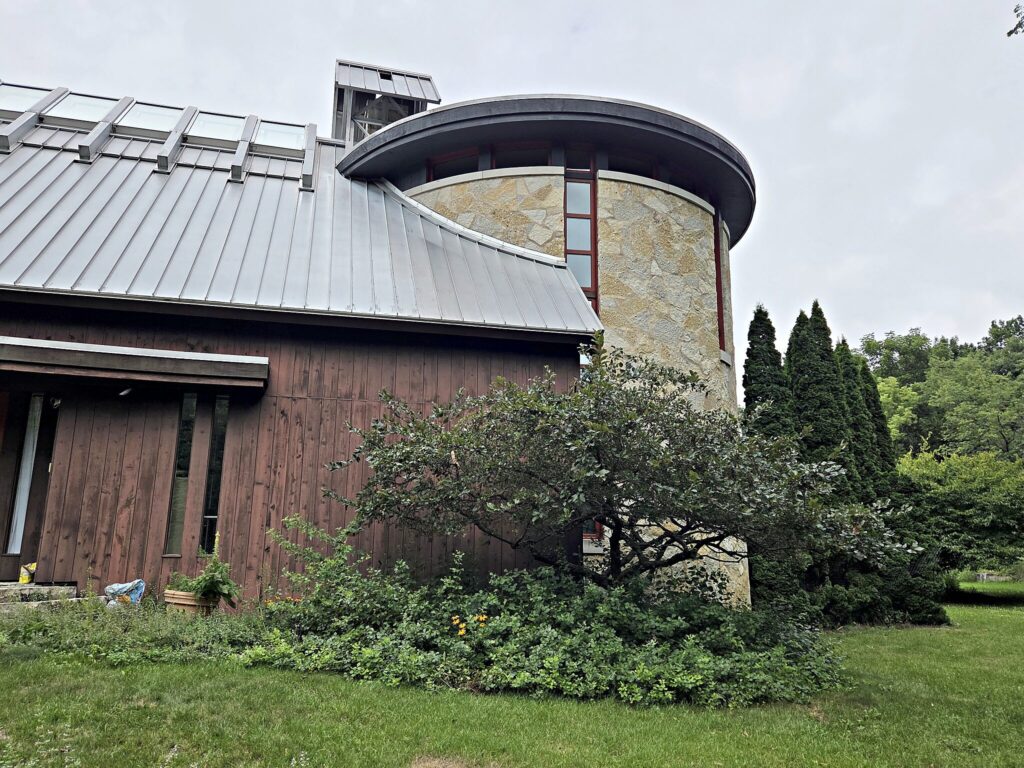
Uniform color does not mean repairs disappear completely. Board shape, surface texture, patches, and old coating edges can still affect the appearance. Have the contractor explain the expected finish standard and any visible limitations before accepting the proposal.
If your priority is to keep the current look, bring an older photograph you like. It helps distinguish restoring a familiar appearance from making the house look newly painted in an entirely different style.
What should a test area answer?
A useful sample is a small decision tool. Agree on its location and purpose before any surface is altered, especially if you have not decided to proceed.
- Does the prepared surface accept the proposed finish?
- How much natural variation remains visible?
- How does the sample look beside trim, roofing, and any replacement boards?
- Is the difference from the existing finish acceptable in both sun and shade?
- Does the result justify the preparation needed across the larger project?
A favorable sample cannot prove a future lifespan. It can help resolve appearance and preparation expectations that would otherwise remain assumptions.
What will future maintenance involve?
Before choosing, ask what future care will involve for the specific system. Will the next visit be an assessment and maintenance coat, localized preparation, or more extensive coating removal if the finish fails? What visible changes should prompt a call?
A recommendation of “less maintenance” needs context: less than which alternative, on what condition of siding, and with what upkeep? Do not assume a stain label guarantees freedom from peeling, or that paint eliminates maintenance. Keep the product names and preparation scope with your house records.
For a Waukesha County project, also discuss access to upper walls and how work on siding will coordinate with trim and fascia. The coating choice is only one part of the job.
Questions to bring to a cedar estimate
Can stained cedar be painted?
It may be suitable, but the existing product and surface condition must be evaluated. Ask for the proposed preparation, primer, and finish system rather than assuming paint can go straight over any stain.
Will stain hide replacement boards?
Not necessarily. Ask how the new and existing material will compare under the proposed opacity, and review a sample where appearance is important.
Do I need to decide before requesting an estimate?
No. Explain the look you want and any maintenance concerns. Midwest Painting Pros can evaluate cedar siding painting and staining options and separate agreed repairs from coating preparation. Use our estimate checklist to compare the resulting scopes.