Which existing finishes should guide your palette?
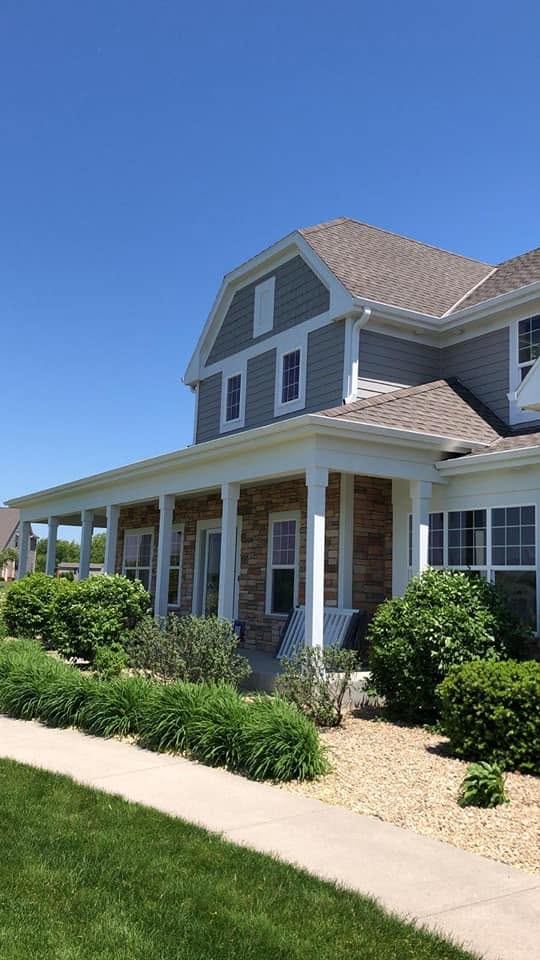
Walk around the house and identify which finishes are staying. Include the roof, masonry, mortar, window frames, garage doors, gutters, and hardscape that is visually prominent. Some may be paintable, but that does not mean they are included in your project.
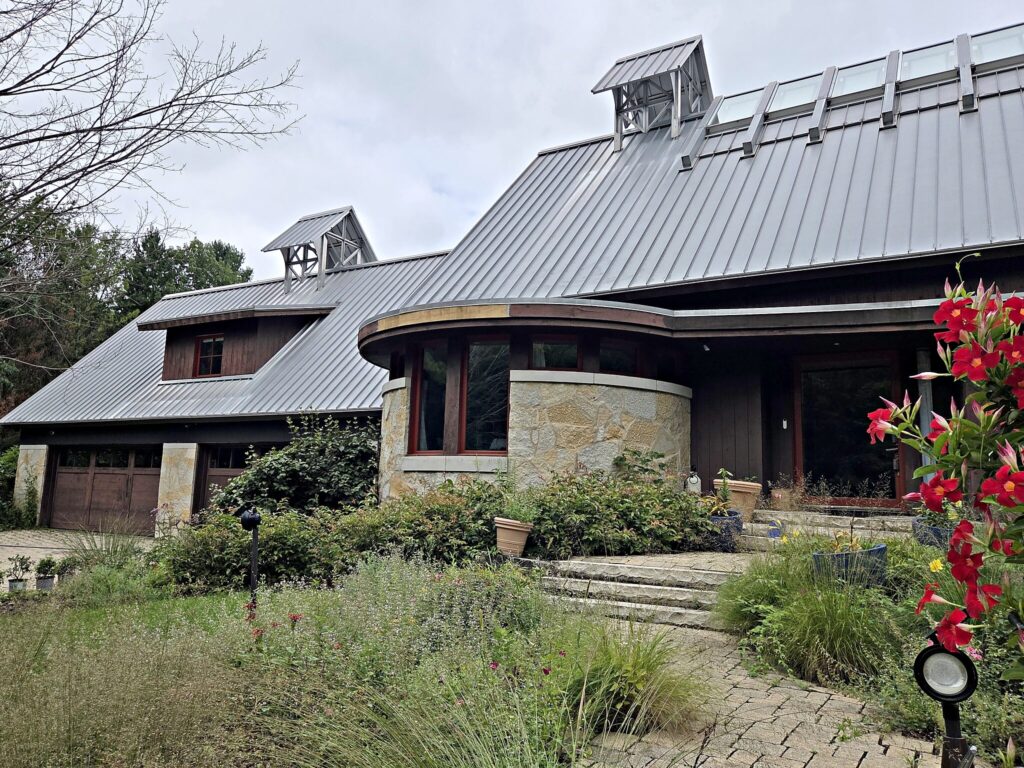
Benjamin Moore’s exterior color guidance treats existing brick, stone, and roofing as part of the palette, and recommends evaluating colors in their actual light. Those are useful starting points before picking the body color. See Benjamin Moore’s exterior color guidance.
Write down what you like and dislike about the current appearance. “The trim feels too bright beside the stone” gives a clearer direction than “the house needs a modern color.” Keep the discussion tied to your building rather than a different home’s proportions and materials.
What should the body, trim and accent colors do?
Think in terms of roles instead of a target number of paint cans. A restrained palette can still have character if the contrast is placed deliberately.
| Role | What to decide | Check beside |
|---|---|---|
| Body | The main painted siding color. | Roof, masonry, and the largest unpainted surfaces. |
| Trim | Whether edges should contrast strongly or blend more quietly. | Window frames, gutters, porch details, and body samples. |
| Accent | Which feature should attract attention, if any. | The entry, shutters, or another intentionally selected detail. |
| Existing finishes | Which materials stay as they are. | All proposed paint samples, not just the body color. |
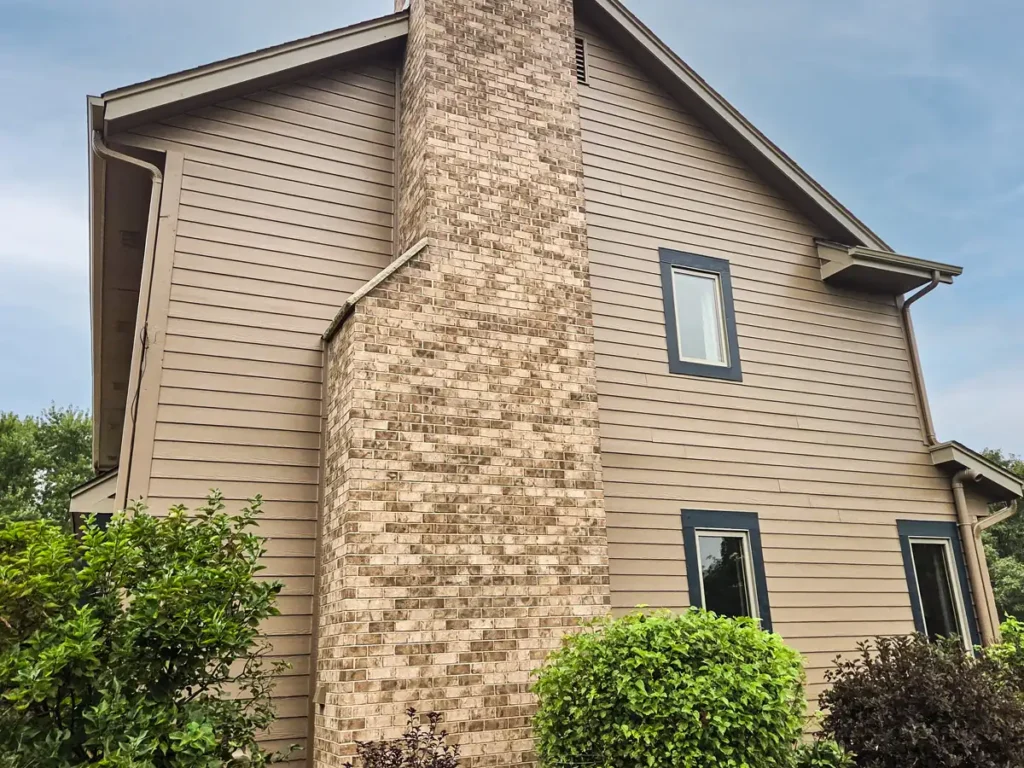
You might prefer a close body-and-trim relationship with a contrasting entry, or a single painted color beside expressive stone. Decide which features deserve emphasis before creating contrast around all of them.
How can you narrow the shortlist?
Here are three starting exercises to narrow a shortlist. They are illustrative directions, not prescribed colors or descriptions of the products used in our project photographs.
- For a house with varied masonry: try a quieter body option that does not compete with every color in the stone. Compare it with both the mortar and the larger stone areas.
- For a house with prominent window frames: test the body and trim beside the frame color that will remain. Decide whether the frames should stand out or feel integrated.
- For a house with little material variation: compare a restrained palette with one that puts contrast at the entry. Judge the whole facade, not the door sample alone.
If a roof replacement or new windows are already planned, include those decisions in the conversation. A palette chosen around finishes you intend to remove may need revisiting sooner than expected.
How should you test exterior paint samples?
Benjamin Moore recommends applying its brush-on samples to a white foam board and viewing them outside through changing light. It specifically notes that those samples are for interior use and should not be brushed directly onto the exterior. Follow the instructions for whichever sample product you choose. Read the sampling section in its exterior guide.
What a sample tells you
A physical board shows how the candidate looks beside your brick, windows and trim in the light at your home. Move the same board between shaded and sunny elevations.
What it does not prove
A color sample does not establish the final paint’s durability, sheen or suitability for vinyl. Those belong in the written product and surface specification.
- Label each sample with its manufacturer, color name and code.
- Compare beside a fixed finish, from both the wall and the street.
- Revisit in morning and afternoon, including sun and shade where available.
- Remove rejected choices, then confirm the selected body, trim and accent together.
Use the same labeled samples throughout the review so you can compare your choices consistently as the light changes.
A screen rendering or edited photograph can help explore placement, but it should not be your final color standard. Keep the approved physical sample and written specification together so the final decision does not depend on how a phone displays the image.
What should you confirm before approving the colors?
Some exterior materials constrain the available colors or coating systems. Vinyl is an important example: darker choices require specific checks, not merely a premium paint. Sherwin-Williams’ vinyl color guidance explains its specified options. Raise material limits before spending time finalizing an unsuitable shade.
Also check any applicable neighborhood approval requirements yourself before authorizing work. The contractor should know which colors are approved, not be left to interpret a pending application or an informal conversation.
Create a final schedule with one row per surface: body siding, trim, fascia, doors, shutters, and any other included areas. Record product, color name and code, sheen where applicable, and exclusions. A color change made later should be confirmed in writing so old and new instructions cannot be confused.
Common exterior color questions
Should trim match the windows?
It can, but it does not have to. Compare the combination on your home and decide whether you want the window frames to blend or contrast. Confirm which window surfaces are actually included for painting.
Can you identify a paint color from a project photograph?
Not reliably. Ask whether a verified color record exists. A photograph without that record is useful for inspiration, not an exact product specification.
Do I need final colors to request an estimate?
No. Start by describing the surfaces and whether you anticipate a major color change. Midwest Painting Pros can discuss the exterior painting scope; final colors and their impact on the proposed work should be confirmed before the job proceeds. Our estimate checklist helps keep those details organized.