What must be checked before preparation starts?
Ask what the contractor has identified: existing coating failure, damaged boards, staining, moisture concerns, or surfaces needing further assessment. A proposal should distinguish visible conditions from concealed problems that cannot yet be confirmed.
For pre-1978 homes, work that disturbs old paint can trigger Wisconsin lead-safe requirements. Resolve who is qualified to perform covered work before scraping or sanding starts; do not assume every painting contractor holds the required certification. Wisconsin DHS explains lead-safe renovation requirements.
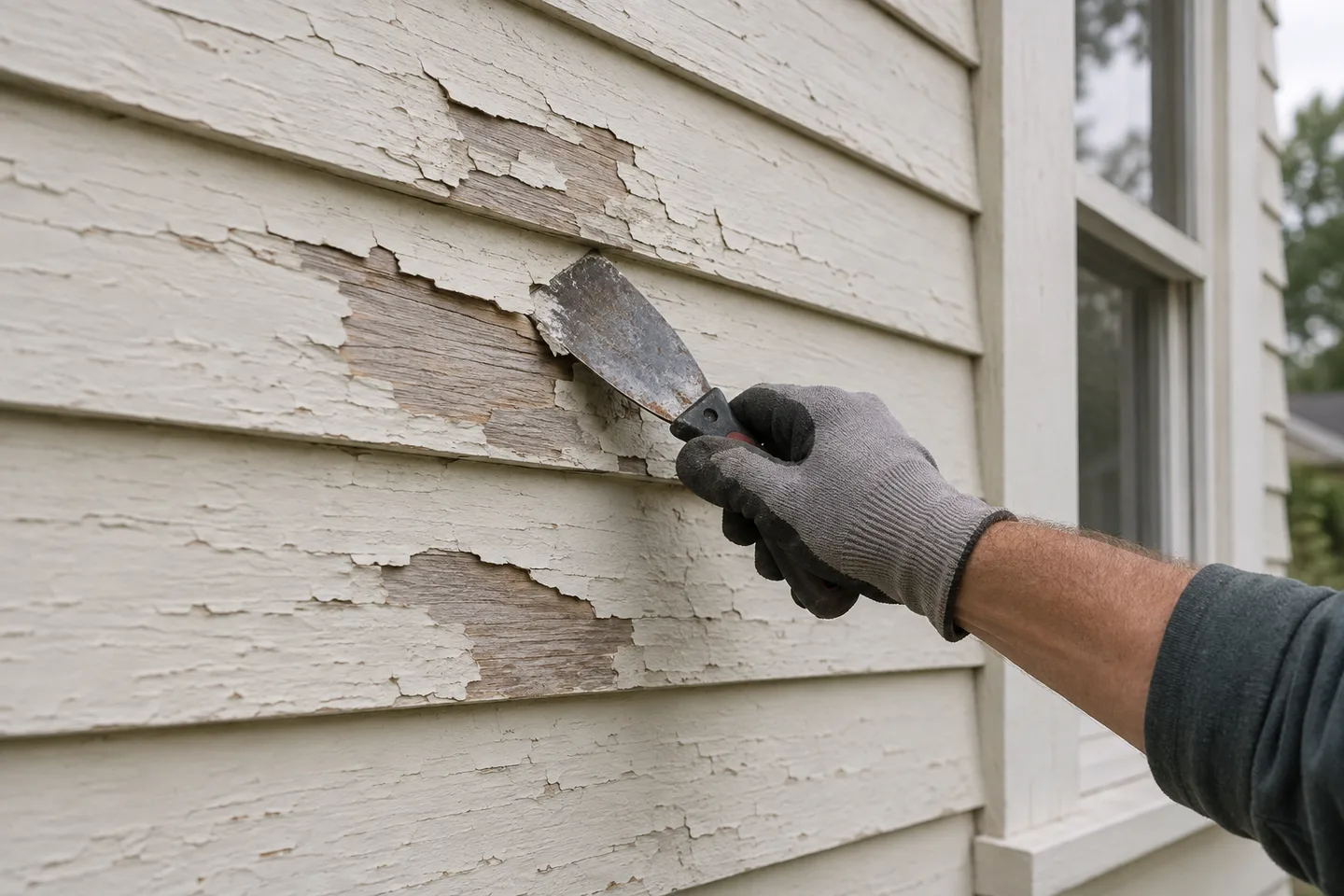
If the main concern is flaking paint, our peeling exterior paint guide explains why the cause belongs in the assessment. Simply naming a stronger primer does not explain an unresolved leak or damaged substrate.
What should be protected before work starts?
Walk through the areas around the house with the contractor. Identify items that will be moved, protected, temporarily inaccessible, or excluded from the work. A few minutes of planning can prevent different assumptions about responsibilities.
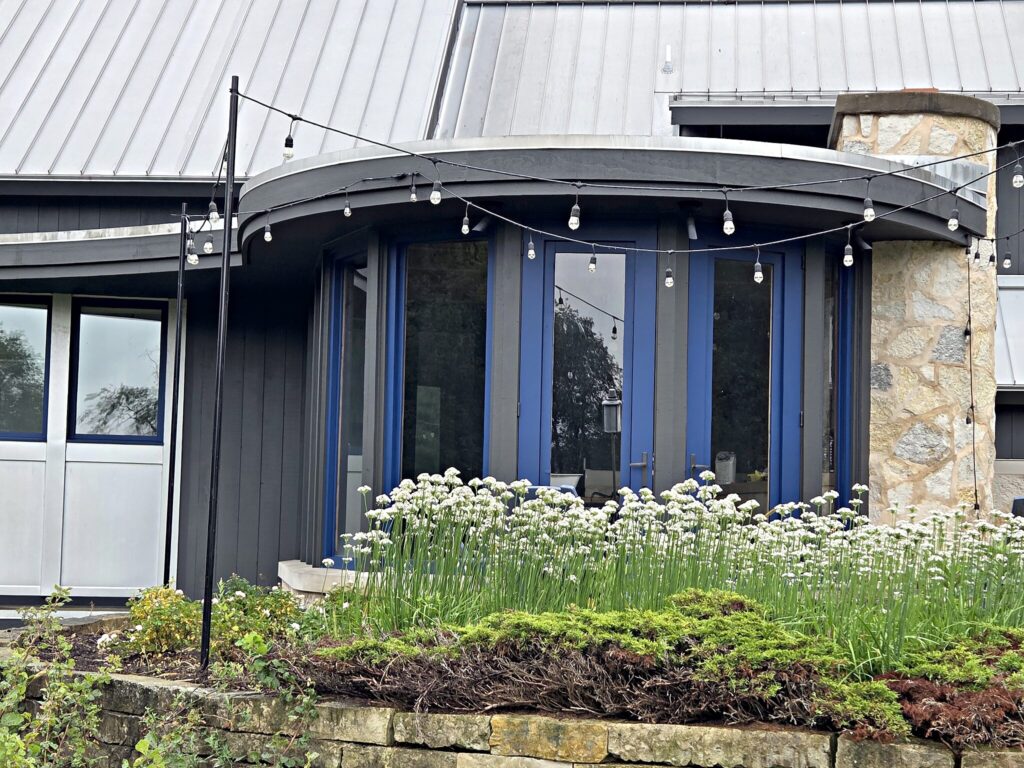
- Windows, doors, fixtures, roofing, and surfaces that will not be painted.
- Plantings, furniture, grills, vehicles, and neighboring property near the work.
- Entry routes, pets, gates, and access to work areas.
- Who handles moving items and whether equipment needs additional clearance.
- How debris and removed coatings will be contained and cleaned up as applicable.
Ask how protection will be maintained as crews move around the house. “We cover everything” is less useful than knowing which nearby items are included and which you need to move.
Does washing count as complete preparation?
No. Washing removes contamination; it does not establish that remaining paint is bonded or damaged boards are suitable to coat. Sherwin-Williams describes a suitable painting surface as clean, solid, and dry, and calls for removing contamination and preparing failing coatings to sound material. Its guidance also includes checking compatibility before full application. The selected coating’s current instructions determine the actual preparation. Read the surface-preparation guidance.
Ask what cleaning method suits your siding and how readiness for coating will be assessed afterward. Pressure washing is not a universal requirement: LP specifically advises against it for SmartSide because of possible moisture intrusion and surface damage. See LP’s care instructions.
Cleaning complete
Dirt and relevant contamination have been addressed using a method suited to the siding. The substrate still needs time and suitable conditions to dry.
Ready for coating
Remaining coating is stable, repairs and specified primer are addressed, and surface and weather conditions meet the chosen system’s instructions.
There is no universal “paint 24 hours after washing” rule for every house. Material, shade, weather and the coating system affect readiness. Where the product sets a moisture limit, check the surface against that limit rather than substituting an elapsed-time guess.
Which repairs and primer should the scope include?
| Work category | Question for the proposal |
|---|---|
| Repairs | Which boards, trim pieces, or other defects are included, and what remains an unresolved allowance? |
| Existing coatings | Which failing areas will be prepared, and what finish texture should you expect afterward? |
| Joints and sealants | Which joints will be treated under the material’s requirements, and which must remain open for drainage or movement? |
| Priming | Which exposed, repaired, stained, or other specified surfaces need primer, and which product is proposed? |
| Readiness | How will surface condition and suitable application conditions be checked before coating? |
Do not equate thoroughness with caulking every seam or priming every surface. Ask why the specified work is appropriate. Our carpentry repair service and wood siding page explain how agreed repairs fit alongside painting.
What should the prepared surface and finished work look like?
Expect a stable, properly prepared base—not an automatic factory-new finish on old siding. Discuss visible coating edges, grain, repairs, and texture before the project begins. If a particular area is important, ask whether a sample can establish the expected appearance.
Also agree on the walkthrough: which surfaces will be reviewed, how touch-ups will be recorded, and how cleanup is confirmed. Keep the written scope available so the conversation is about the agreed work rather than a different expectation introduced at the end.
For scheduling, ask how drying and weather interruptions are handled. Our Wisconsin exterior painting season guide explains why a promised calendar day cannot replace checking the product and conditions.
Preparation questions worth asking
Does all old paint have to come off?
Not automatically. Ask which existing coatings are suitable to remain and what preparation the proposed system requires. Full removal and localized preparation are different scopes.
Should I pressure wash before the painter arrives?
Only after agreeing on the method and responsibility with the contractor. Uncoordinated washing can create a different surface condition or schedule than the proposal assumes.
Is “prep as needed” enough in an estimate?
Ask for clarification of the known work and the process for additional findings. Use our estimate checklist to compare those details before accepting a proposal.
Header image: an existing AI-generated preparation illustration, not a client-job photograph or a demonstration of a complete safety setup.